AI Proof Careers India 2026: 14 Jobs, 1 Catch
⏱ 12 min read
QUICK ANSWER
The AI proof careers India actually needs are the ones built on physical presence, legal accountability or human trust — healthcare, skilled trades, teaching, regulated professions and senior technical judgement. India faces a projected shortfall of 1.98 million nurses and 0.57 million doctors by 2030 (Human Resources for Health, 2023) and a gap of roughly 6 million allied health professionals.
The catch: most lists tell you to become an AI engineer or data scientist. But entry-level IT roles in India have shrunk by 20–25% as firms shift to specialised hiring (NASSCOM, 2026). The safe-sounding advice points straight at the squeezed doorway.
Register on Ayud Jobs & Get Hired Faster
Create your free profile, apply in one tap, and let recruiters find you. Your next opportunity is closer than you think.
Both Science and Commerce contain strong AI proof careers India will be short of. The stream matters far less than whether your role carries accountability a machine cannot hold.
I have had this conversation forty times in the last three months, and it always opens the same way: “Sir, will AI take this job?” So let me answer before the storytelling. The AI proof careers India is genuinely short of are not the ones on the popular lists — they are roles where someone must be physically present, legally answerable, or personally trusted. Nursing, allied health, skilled trades, teaching, regulated finance and law. India’s own hiring data says so plainly.
Here is what makes me uneasy about the advice circulating right now. Nearly every article on AI proof careers India throws up in search results names the same three jobs — AI engineer, data scientist, cybersecurity analyst — and most of them are published by institutions selling courses in exactly those subjects. That is not a conspiracy. It is just an incentive worth knowing about before you plan four years around it.
AI proof careers India 2026: what the hiring data actually shows
Start with the global frame, then come home. The WEF Future of Jobs Report 2025 projects 170 million new roles created and 92 million displaced by 2030 — a net gain of 78 million, but a churn of 22% of formal jobs and 39% of core skills changing. A net positive that involves entirely different people. Note the year on that report, incidentally: several pages ranking for AI proof careers India today quote these figures as 2026 data. They are from January 2025.
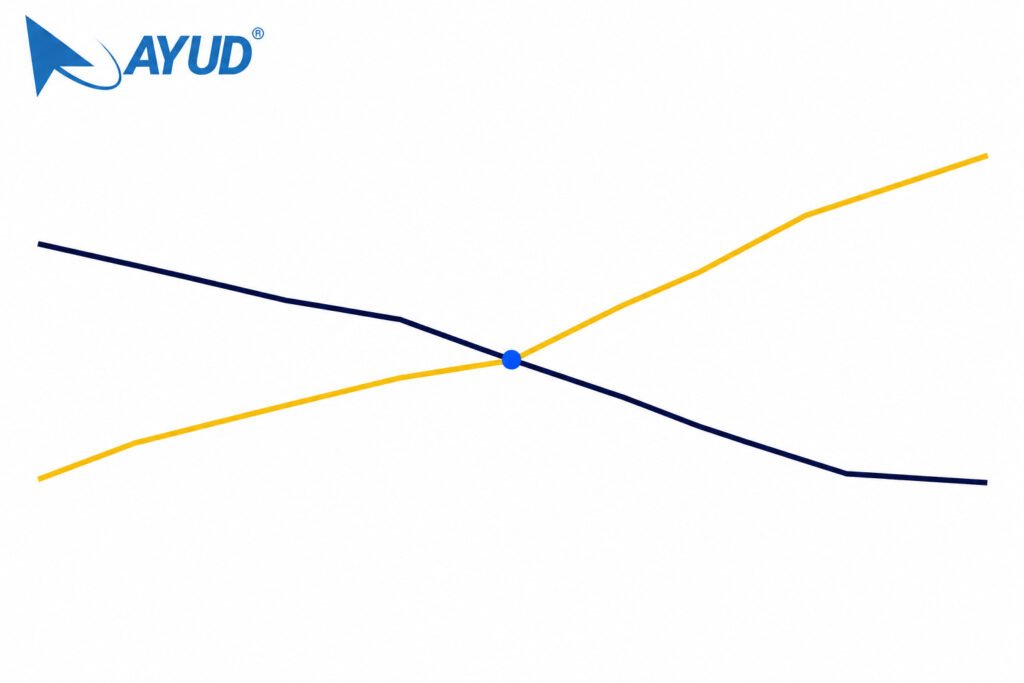
India’s picture is sharper and more uncomfortable. Entry-level IT roles have contracted 20–25% as the sector moves from volume hiring to specialised hiring, with NASSCOM describing the shift as a turning point (reported by Storyboard18, 2026). At Infosys, employees aged 30 and under fell to 50.7% of a 3.28 lakh workforce in FY26, down from 53% and the lowest share in fifteen years (Mint, 2026). Fresher hiring intent across industries dropped to 14% of new hires, from 18.8% the previous year (India Skills Report, via NASSCOM).
Now the part nobody puts in the headline. Naukri’s JobSpeak index for January 2026 showed IT flat for the month while BPO/ITES grew 21%, hospitality and travel 15%, insurance 7% and healthcare 5% — with overall fresher hiring up 8%. The growth in AI proof careers India is currently producing sits largely outside the sector everyone is anxious about.
How do I know if a career is AI proof?
Ask four questions. Does the work require physical presence in an unpredictable environment? Does someone carry legal or professional accountability for the outcome? Does it depend on trust built with a specific human being? Does it need judgement under incomplete information? Score three or four yes answers and the role holds. Score one, and the clock is running.
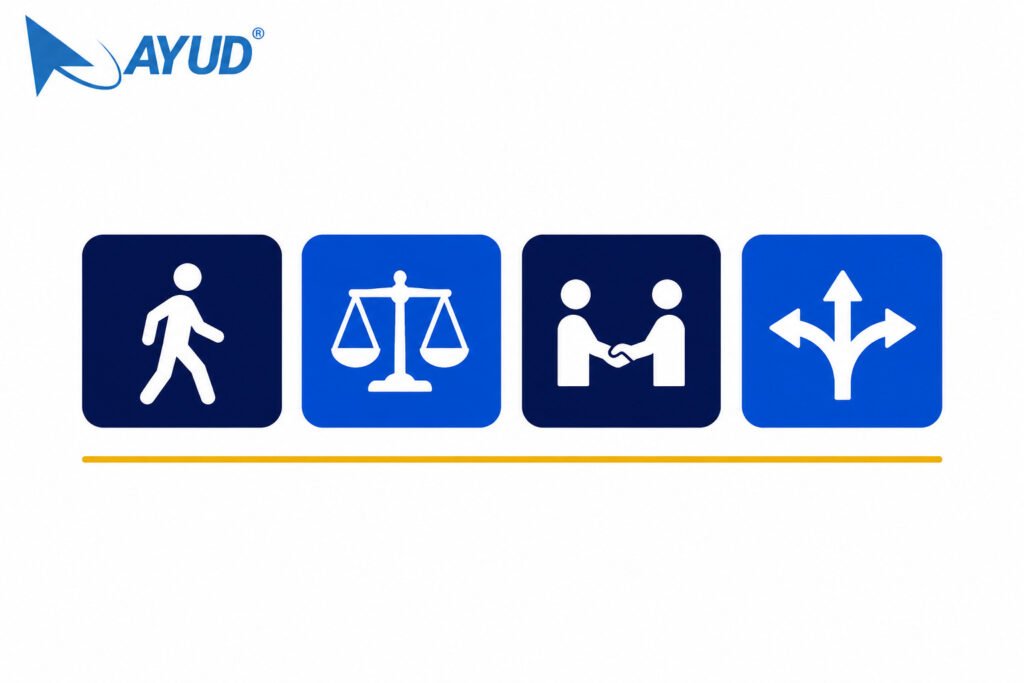
That test matters more than any job list, because AI is not replacing occupations wholesale — it is eating tasks inside them. A radiologist who only reads scans is exposed. A radiologist who signs off, explains findings to a frightened patient and carries liability is not. This is why the AI proof careers India will still need in 2035 cannot be identified from a job title alone. You have to look at what the person is actually accountable for on a Tuesday afternoon.
The 14 roles, and the evidence behind each
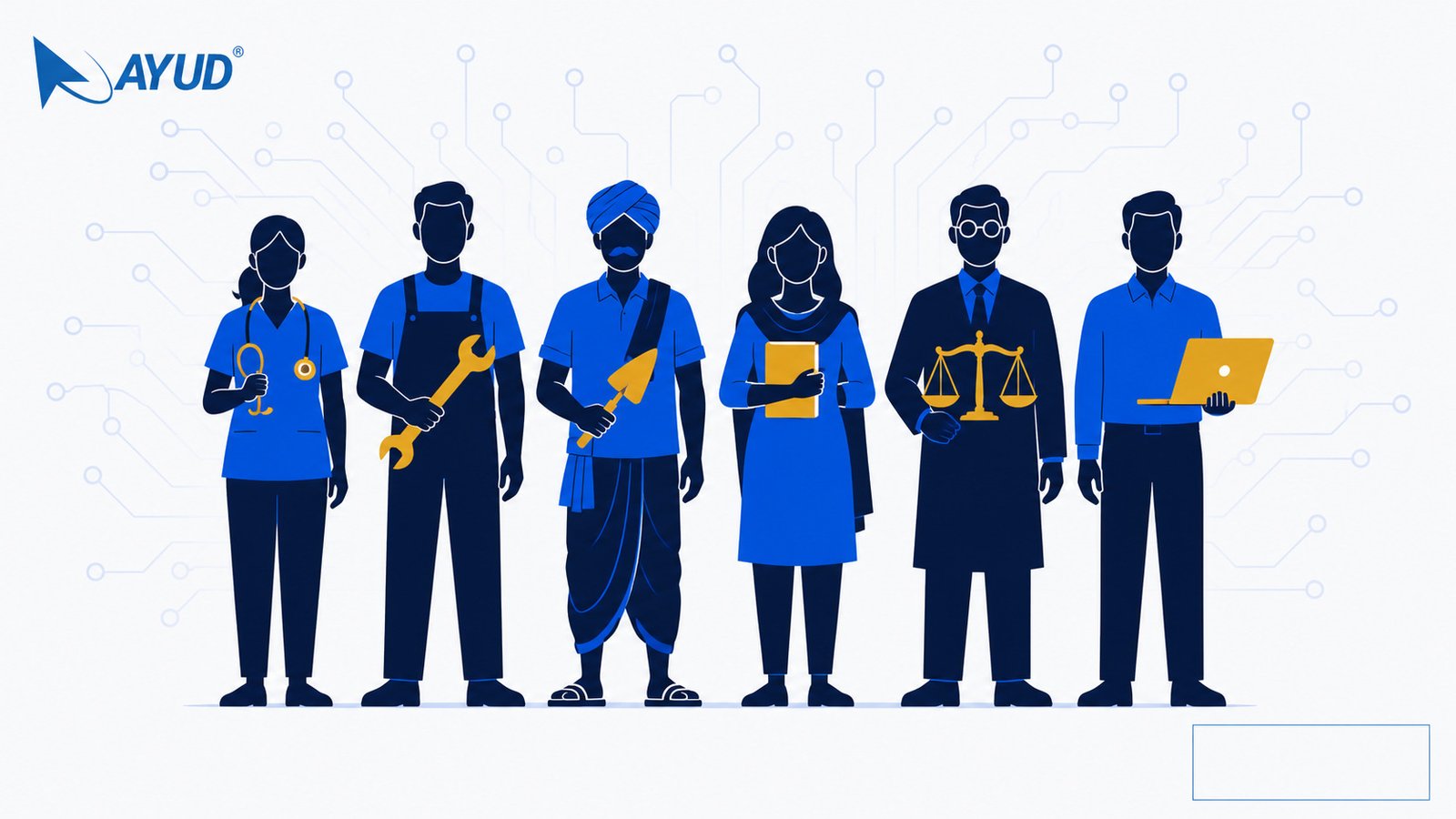
Below is my working list of AI proof careers India has real, documented demand for — not aspiration, not brochure copy. Each row names the reason it holds and the number or signal behind it.
| Role | Why it holds | Demand signal | Entry route |
|---|---|---|---|
| Nurse / nurse practitioner | Physical care, constant judgement | 1.98 million shortfall projected by 2030 | B.Sc Nursing, GNM |
| Allied health professional | Hands-on diagnostics and therapy | ~6 million AHP gap; ₹1,000 cr in Union Budget 2026-27 | B.Sc Allied Health |
| Doctor / specialist | Life-or-death accountability | 0.57 million active-workforce shortfall by 2030 | NEET, MBBS |
| Physiotherapist | Physical, individualised, iterative | Part of the allied health gap above | BPT |
| Electrician / industrial electrician | Unstructured physical environments | Trades shortage forecast within 5 years | ITI |
| Plumber / HVAC technician | Non-repeatable site conditions | Same forecast; strong overseas demand | ITI |
| Welder / fabricator | Precision physical skill | Manufacturing and infrastructure expansion | ITI |
| Automotive and EV technician | Diagnosis on physical machines | EV transition retooling the service base | ITI, diploma |
| Site / construction supervisor | On-ground decisions, safety liability | Sustained infrastructure pipeline | Diploma or BE Civil |
| School teacher, early years | Relational, developmental, regulated | Structural demand across the country | B.Ed, D.El.Ed |
| Psychologist / counsellor | Empathy and clinical judgement | Rising demand in schools and workplaces | BA/MA Psychology |
| Chartered Accountant / auditor | Signing authority carries liability | Audit sign-off cannot be delegated to software | CA after 12th |
| Lawyer / compliance officer | Regulated accountability | Compliance load rising with AI adoption | LLB, integrated law |
| Senior AI/ML engineer | Designs the systems, not the output | AI engineering postings up 59.5% YoY in India | BE plus real projects |
Sources: Human Resources for Health (2023); Medical Buyer on Union Budget 2026-27 allied health allocation (2026); NASSCOM and Storyboard18 (2026); LinkedIn AI Labour Market Report (2026). Skilled-trades shortage is a five-year forecast by Pinetree’s Ritesh Jain (2026), not recorded data — treat it as a directional signal.
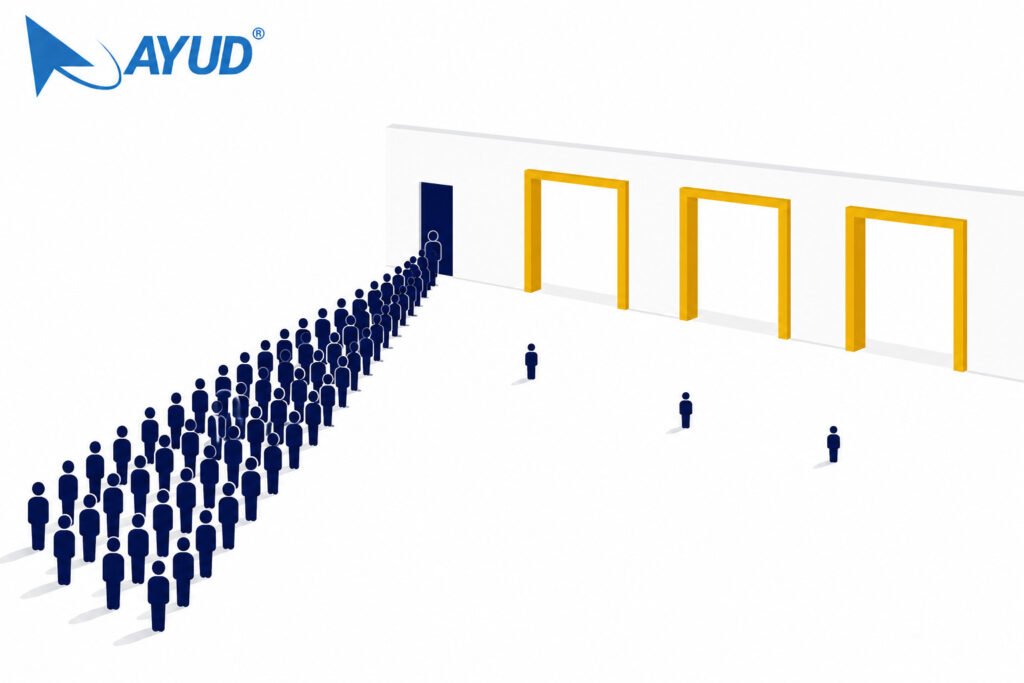
Read that last row carefully, because it is where most lists of AI proof careers India circulates quietly mislead people. Senior AI engineering is genuinely resilient. Entry-level AI engineering is the single most crowded doorway in the country right now.
The catch: the safe list everyone copies is partly wrong
Here is my honest disagreement with almost every article ranking above this one. They recommend AI proof careers India cannot currently absorb at entry level. Demand for AI professionals is projected to cross one million, and only about 16% of existing IT professionals hold AI-ready skills (NASSCOM). Both true. But that gap is a gap for people with five years of experience and a portfolio — not for a 21-year-old with a certificate and no shipped work.
Second, and this is the part that costs families money: the same AI proof careers India keeps recommending are being taught in thousands of colleges with no lab, no faculty depth and no recruiter footfall. The India Skills Report 2026 puts computer science employability at 80% and IT at 78% against an overall graduate figure of 56.35%. Those are strong numbers — but they are averages dominated by strong institutions. A weak college in a strong branch is not a strong outcome. If cost is a factor in that decision, I have written separately about low fee engineering colleges Karnataka families can actually reach, and about the DCET 2026 Karnataka diploma route into the second year of a degree.
Third, the trades. There is a plausible forecast that India will be short of plumbers, electricians, carpenters, drivers, nurses and caregivers within five years as ageing economies recruit them away. Whether or not that timeline holds, the direction is not seriously disputed: the world is long white-collar graduates and short skilled hands. If that route interests you, start at ITI admission 2026 Karnataka rather than assuming a degree is automatically the safer bet.
Science or Commerce: which stream is more AI proof?
This is the question underneath the question, and it usually arrives in Class 10. Parents ask about AI proof careers India will need, but what they are really asking is which stream to choose next month. So let me answer it directly, and then complicate it honestly.
| Science | Commerce | |
|---|---|---|
| Strongest resilient routes | Medicine, nursing, allied health, physiotherapy, core engineering, trades via diploma | CA, CS, law, actuarial, relationship and institutional sales, compliance |
| Most exposed within the stream | Routine IT services, entry-level coding, basic testing roles | Book-keeping, data entry, routine tax filing, templated reporting |
| What protects the strong routes | Physical presence and clinical accountability | Signing authority and regulatory liability |
| Common mistake | Taking Science only for engineering, then landing in a weak CS seat | Taking Commerce as the “easy” option with no professional qualification planned |
The verdict most people do not expect: neither stream is safer. Both contain AI proof careers India will be short of, and both contain roles that are already being automated. Science holds an edge on physical and clinical work. Commerce holds an edge on regulated accountability — a CA’s signature carries legal weight that no model can assume, and that is a more durable moat than most technical skills.
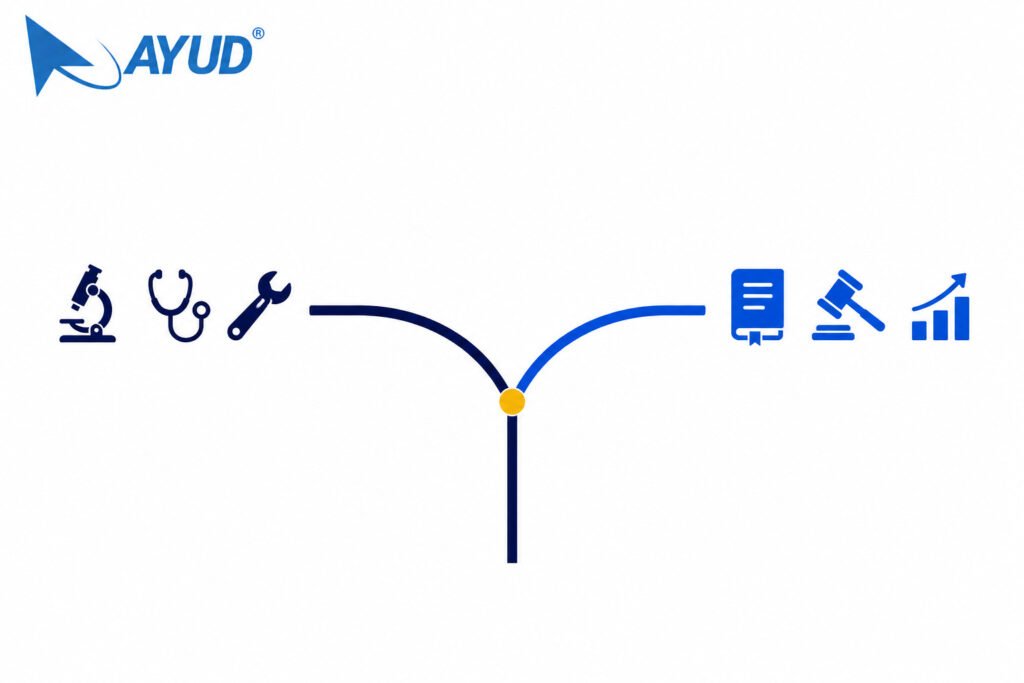
What actually decides the outcome is the second choice, not the first. A Commerce student who qualifies as a CA is in a far stronger position than a Science student who drifts into an unaccredited engineering seat. Pick the stream that matches how your child actually thinks, then plan the professional qualification on day one. The AI proof careers India rewards are reached through a qualification, not through a stream.
The Ayud lens: scarce, balanced or overvalued
Scarce. Nursing, allied health, skilled trades, special-needs teaching, clinical psychology. Documented shortages measured in millions, weak competition, and almost no marketing spend pushing students towards them. These are the most underpriced AI proof careers India currently has, and they carry the least social prestige — which is precisely why they stay open.
Balanced. CA, law, core engineering, teaching, senior technical roles. Real demand, real competition, long qualification runways. Good outcomes for students who finish. Genuinely hard, and the attrition is where the opportunity lives.
Overvalued. Four-year AI or data science degrees at institutions with no lab, no research and no placement record, taken because the name sounds future-proof. This is the most expensive mistake in Indian career planning today. The subject is not the problem. The seat is.
The honest summary: the AI proof careers India is most short of are the ones with the least glamour attached. Follow the shortage data, not the brochure.

The student who changed one word
Last year a mother from a small town brought her daughter to me with a decision already made — B.Tech in artificial intelligence, at a private college neither of them had visited, because a relative had said AI was safe. The girl had scored well in biology and disliked mathematics. We spent an hour on the four-question test above, then looked at what she was actually good at: remembering people, staying calm, explaining things patiently.
She took B.Sc Nursing instead. She is now in her second year, has already done clinical rotations, and has three seniors placed in Gulf hospitals ahead of her. Her fee is a fraction of the AI degree. The word that changed was not “AI” — it was “safe”. Once we defined that properly, the list of AI proof careers India offered her looked completely different.
FAQ: AI proof careers India questions parents ask me most
Q1. Which are the most AI proof careers India offers right now?
Healthcare roles lead on documented shortage — nursing (1.98 million projected shortfall by 2030), allied health (~6 million gap) and medicine (0.57 million doctors). Skilled trades, teaching, clinical psychology, CA and law follow, all protected by physical presence or legal accountability.
Q2. Is software engineering finished as a career in India?
No, but the entry point has narrowed sharply. Entry-level IT roles have shrunk 20–25% (NASSCOM, 2026), while AI engineering postings grew 59.5% year-on-year. Experienced and specialised roles are expanding; generic fresher roles are not. Enter with real projects, not just a degree.
Q3. Are AI proof careers India needs available to Commerce students too?
Yes. CA, company secretary, law, actuarial science and compliance all rest on regulated accountability that software cannot assume. Routine book-keeping and templated reporting are the exposed parts of Commerce — the qualification is what separates the two.
Q4. Should my child do an ITI or a degree if we are worried about AI?
On current evidence, a completed ITI in a skilled trade is more defensible than an unaccredited engineering degree. Trades require physical work in unpredictable settings, and overseas demand is rising. A strong degree still beats both — a weak one does not.
Q5. How often should we revisit this decision?
Once a year until Class 12, then at each qualification milestone. The list of AI proof careers India needs will keep shifting, but the four-question test in this guide will not. Test the role, not the job title.
What to do this week
If you take one thing from this: the AI proof careers India is genuinely short of are being ignored because they do not sound impressive at a family gathering. Nursing. Allied health. Trades. Teaching. Meanwhile thousands of families are paying a premium for degrees in the one field where the entry door is narrowing fastest. Run the four-question test on whatever role your child is considering. If it scores one out of four, keep looking.
Before you lock a stream or a course: spend fifteen minutes on GoTestIt to see how your child actually thinks — because the stream matters far less than the fit.
Want the decision mapped properly, with a qualification plan attached? Book a Clarity Session and we will build the roadmap together.
Registration on ayudjobs.com is free, and the Ayud app keeps the shortage data and admission deadlines in your pocket.
Register on Ayud Jobs & Get Hired Faster
Create your free profile, apply in one tap, and let recruiters find you. Your next opportunity is closer than you think.