India Skills Shortage 2026: 5 Hard Truths
⏱ 7 min read
In Short (Quick Answer)The india skills shortage 2026 is real, but it is not a shortage of people. According to the India Skills Report 2026, only 56.35% of graduates are job-ready, while the State of Working India 2026 report (Azim Premji University) found nearly 40% of graduates aged 15–25 are unemployed. We have the crores. We lack the matched skills.
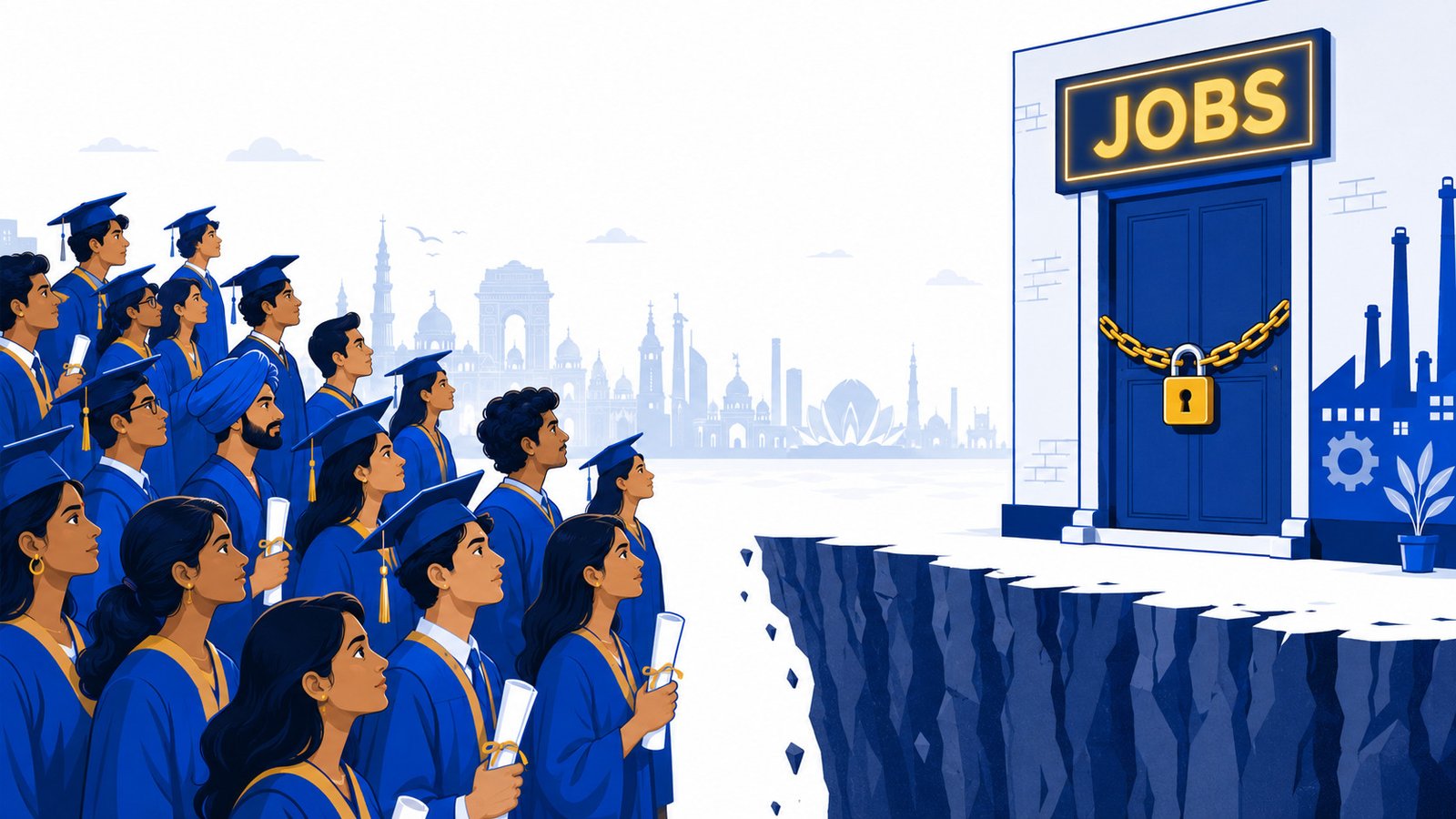
The india skills shortage 2026 is the strangest problem in our job market: companies say they cannot find people, and crores of graduates say they cannot find work. Both are telling the truth. I sit with students and parents in Kalaburagi every week, and this contradiction confuses almost everyone. So let me explain it plainly, with real numbers and no jargon.
Here is the honest picture. India added roughly 5 million graduates every year between 2004–05 and 2023, but only about 2.8 million found jobs, according to the State of Working India 2026 report. The degree pipeline is full. The skills pipeline is leaking.
Register on Ayud Jobs & Get Hired Faster
Create your free profile, apply in one tap, and let recruiters find you. Your next opportunity is closer than you think.
India Skills Shortage 2026: The Number That Doesn’t Add Up
Let me give you the answer first. The india skills shortage 2026 exists because employability and education are two different things, and we keep confusing them. The India Skills Report 2026 (released by ETS with CII, AICTE and Taggd) puts overall employability at 56.35%, up from 54.81% the year before. That sounds positive until you flip it: almost 44% of our graduates are not considered job-ready.
Now add the demand side. The same report says hiring intent jumped to 40% for FY 2026–27, from 29% last year. Companies want to hire more. They simply cannot find enough candidates with the exact skills they need. That mismatch — high willingness to hire, low supply of ready talent — is the shortage in one sentence.

Reason 1: Our Curriculum and Industry Speak Different Languages
The biggest driver of the india skills shortage 2026 is outdated coursework. Employers reported that 72% of undergraduate curricula and 58% of B-school curricula are not aligned with current industry needs, per the India Skills Report 2026. A student can score 80% in exams and still not know the one tool the job demands.
This is why a graduate with a “good” marksheet can sit jobless for months. The degree certifies that you finished a syllabus. It does not certify that the syllabus matched the market. If you want to see which fields are actually in demand right now, read what the India Skills Report 2026 actually says before you pick a course.
Reason 2: We Reward the Degree, Not the Skill
For decades, families chased the certificate. But hiring has quietly changed. The 2026 data shows 64% of employers now treat candidates with AI/ML, data science and cybersecurity skills as premium talent, regardless of which college they attended. Only 31% still prioritise an IIT/IIM tag.
So a part of the india skills shortage 2026 is a mindset gap. The market moved to “skills-first” hiring. Many of our students and parents are still optimising for “degree-first” admission. The two no longer point in the same direction.
Reason 3: Some Careers Are Crowded, Others Are Empty
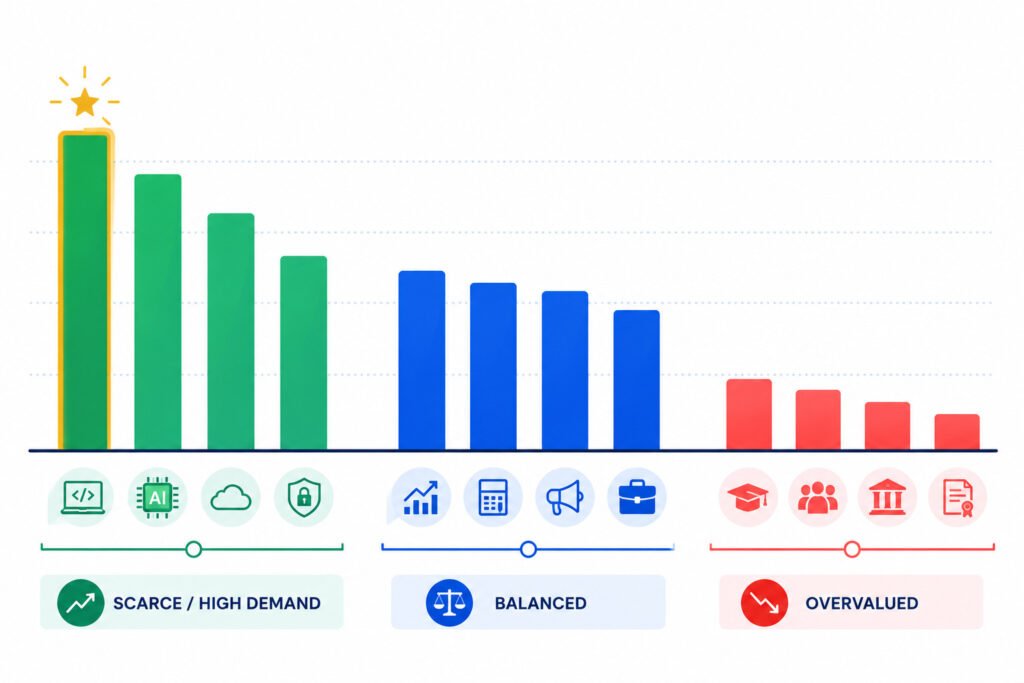
Not every degree faces the same fate, and this is where the india skills shortage 2026 gets interesting. Computer Science graduates show 80% employability and IT engineers 78%, says the India Skills Report 2026. But MBA employability dropped to 72.76% from 78%, and polytechnic sits at just 32.92%.
That is the heart of what I call the scarcity-balanced-overvalued split. Some skills are scarce and pay well; some are balanced; some are badly overvalued relative to real demand. Before you commit three years, map your chosen field against this reality — I break it down in the scarcity–balanced–overvalued career map.
| Field / Degree | Employability 2026 | Direction vs 2025 |
|---|---|---|
| Computer Science | 80% | Leading |
| IT Engineering | 78% | Strong |
| Engineering (overall) | 70.15% | Slight fall |
| Commerce | 62.81% | Up from 55% |
| Science | 61% | Steady up |
| Arts | 55.55% | Steady up |
| MBA | 72.76% | Down from 78% |
| ITI | 45.95% | Up from 41% |
| Polytechnic | 32.92% | Lowest |
Reason 4: Geography Decides Opportunity
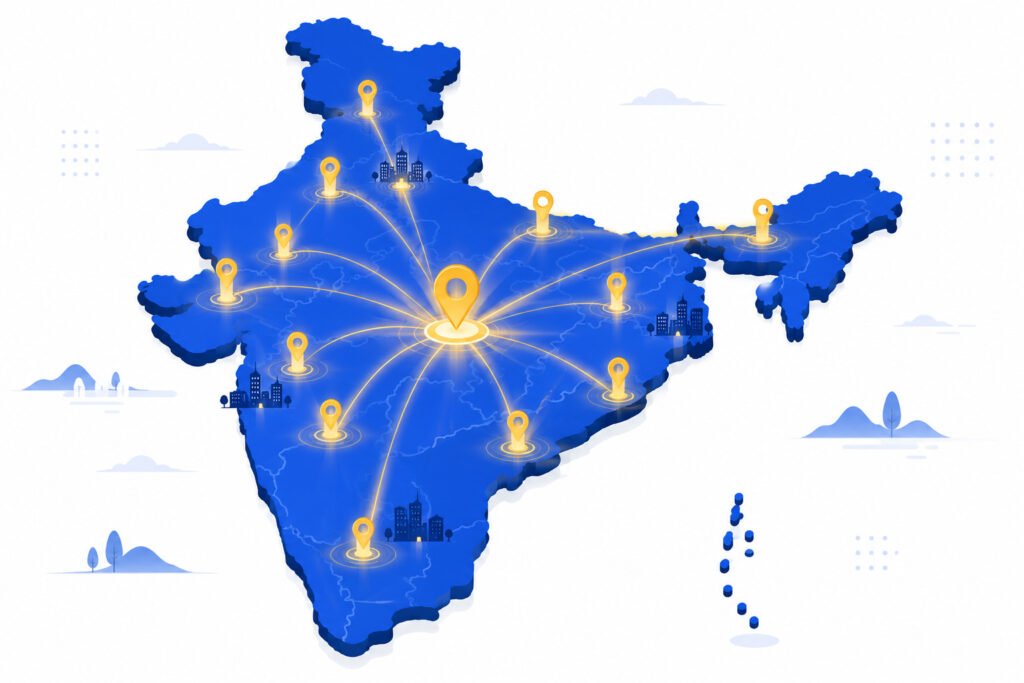
Where you live still shapes the india skills shortage 2026. The good news from the India Skills Report 2026 is that Tier-2 and Tier-3 cities like Lucknow, Kochi and Chandigarh are becoming employability hubs, and Uttar Pradesh has overtaken Maharashtra and Karnataka in rankings. The gap between metro and small-town opportunity is finally narrowing.
But it has not closed. A student in a tier-3 town often does not know which skills are scarce, which courses pay, or how to test their own fit. That information gap — not talent — is what keeps capable students stuck.
Reason 5: We Learn Theory, Not Practice
The final piece of the india skills shortage 2026 is the missing practical layer. Around 92.8% of students want internships or hands-on exposure, says the India Skills Report 2026, yet far too few get it. A degree built on rote learning leaves you with knowledge you cannot demonstrate.
Employers feel this sharply. The State of Working India 2026 report found that of the roughly 5 million graduates entering each year, only about 2.8 million find work — and just 6.7% of graduates land permanent salaried jobs. Proof of ability, through projects and portfolios, now beats the marksheet.
So Is There Really a Skills Shortage in India?

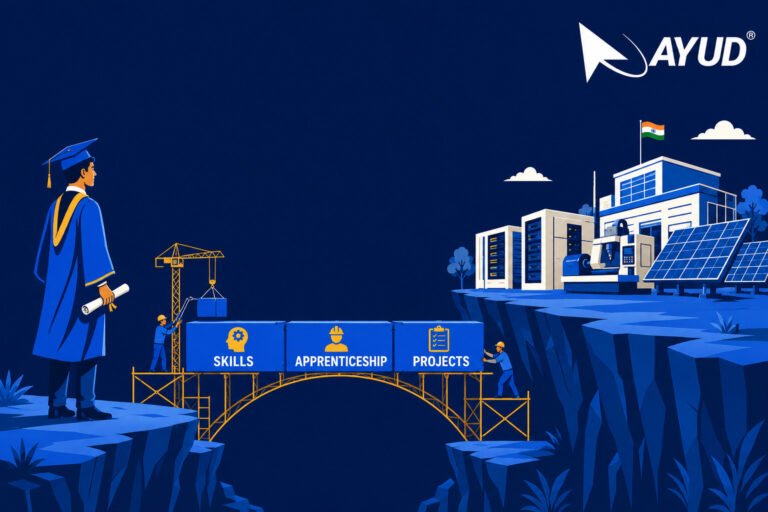
Yes — but it is a matched-skills shortage, not a people shortage. The india skills shortage 2026 means employers cannot find candidates trained in AI, cloud, data and cybersecurity, even as 40% of young graduates stay jobless. The fix is alignment: learn what the market actually buys.
That single shift — from “what degree should I get” to “what skill does the market need” — quietly dissolves most of the india skills shortage 2026 for any one student.
A Real Story From Kalaburagi
Last year a B.Com graduate from Kalaburagi came to me, certain his degree had failed him. He had applied to 30 jobs with no reply. We looked at the india skills shortage 2026 data together: commerce employability had risen to 62.81%, driven by BFSI and fintech, but only for those who knew Tally, GST filing and basic data tools. He knew none.
He spent four months learning exactly those three things and building two sample projects. He now works at an accounting firm in Hubli. The degree was never the problem. The missing, matchable skills were. This is the whole shortage in one young man’s story.
Frequently Asked Questions
What is the india skills shortage 2026 in simple words?
The india skills shortage 2026 means India has plenty of graduates but too few with the specific skills employers need today — like AI, data, cloud and practical job tools. So companies struggle to hire while graduates struggle to get hired.
How many Indian graduates are actually employable in 2026?
About 56.35%, according to the India Skills Report 2026. That is up from 54.81% the previous year, but it still means nearly 44% of graduates are not considered job-ready by industry standards.
Which fields have the highest employability right now?
Computer Science (80%) and IT Engineering (78%) lead, per the India Skills Report 2026, followed by commerce (62.81%) and science (61%). Polytechnic, at 32.92%, sits lowest.
How does a small-town student beat the india skills shortage 2026?
Start by testing your real strengths, then learn one or two scarce, in-demand skills tied to a field that is hiring. The india skills shortage 2026 hits hardest where students guess instead of test. A short self-assessment and a clear roadmap remove most of that guesswork.
Is a degree still worth it?
Yes, but only as a base. Graduates still earn more than non-graduates. The degree opens the door; the skill gets you through it. Pair them and weigh the degree vs diploma — the honest math.
Your Next Step
You cannot fix the whole system, but you can fix your own position inside the india skills shortage 2026 — and that is enough to get hired. Stop guessing your strengths. Test them, then build the two or three skills your target field actually rewards. Take the free GoTestIt self-assessment on Ayud to see where you stand, then let a Clarity Session map your roadmap.
Sources: India Skills Report 2026 (ETS, CII, AICTE, Taggd); State of Working India 2026 (Azim Premji University). Figures cited reflect the 2026 editions.
Register on Ayud Jobs & Get Hired Faster
Create your free profile, apply in one tap, and let recruiters find you. Your next opportunity is closer than you think.