

ITI vs Polytechnic vs GTTC: 2026 Parent Guide
⏱ 10 min read
Quick Answer
In ITI vs polytechnic vs GTTC, ITI is fastest to a job (1–2 years), polytechnic is the widest diploma with a B.E. route, and GTTC is the deepest manufacturing training with the strongest core-industry placement. Fit depends on the student, not the ranking.
Updated: 15 August 2026
Register on Ayud Jobs & Get Hired Faster
Create your free profile, apply in one tap, and let recruiters find you. Your next opportunity is closer than you think.
Every August I sit with parents who ask me about ITI vs polytechnic vs GTTC, and almost all of them have only heard of the first two. GTTC is a Karnataka government institution running since 1972, and it stays invisible to most families until someone points at it. That gap costs students real money and real years.
I am a career counsellor working with students across Karnataka, most of them from Kalaburagi, Yadgir, Raichur and Bidar. This is the conversation I have several times a week, written down properly. No motivational filler, no “follow your passion”. Just what each path costs, what it pays, and which student it actually suits.
ITI vs Polytechnic vs GTTC: The 2026 Comparison Table
The short version of ITI vs polytechnic vs GTTC is that they sit at three different depths. ITI is a trade certificate that gets you employable in 1–2 years, polytechnic is a 3-year AICTE diploma that also opens the lateral-entry route into engineering, and GTTC is a 3–4 year precision-manufacturing diploma run by the Government of Karnataka in partnership with Denmark’s DANIDA since 1972.
| Factor | ITI | Polytechnic | GTTC |
|---|---|---|---|
| Entry after | 8th or 10th (trade-dependent) | 10th (SSLC) | 10th (SSLC) |
| Duration | 1–2 years | 3 years | 3 years, or 4 with in-plant training |
| Where you apply (2026) | cite.karnataka.gov.in | dtetech.karnataka.gov.in | gttc.karnataka.gov.in |
| Selection | Merit-cum-reservation, no exam | SSLC merit, online counselling | SSLC merit, no entrance exam |
| Higher study route | Lateral entry to diploma | DCET → B.E. 2nd year | Post-diploma, B.E., M.Tech |
| Best for | Earning fastest | Keeping options open | Core manufacturing career |
Read that table twice before you decide anything. Most families lose the ITI vs polytechnic vs GTTC argument at home because they compare prestige instead of comparing these six rows.
What Each Path Actually Is
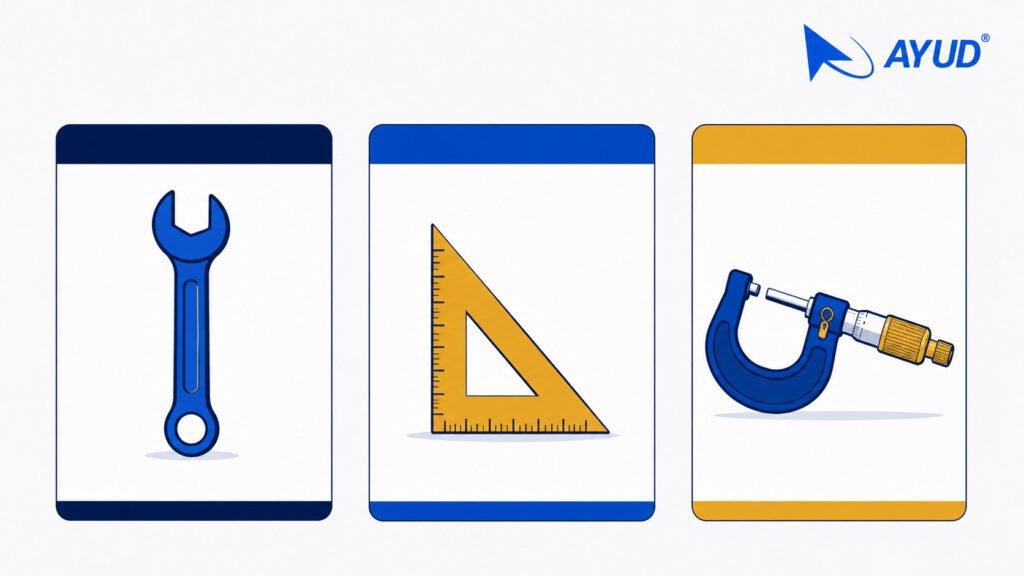
Before you can judge ITI vs polytechnic vs GTTC, you need to know what happens inside each classroom, because the brochures all sound identical.
ITI — the fastest route to a pay slip
An Industrial Training Institute teaches one trade and teaches it hard: electrician, fitter, welder, turner, mechanic, COPA. Theory is minimal. You are on machines from the first month.
Karnataka runs this at serious scale. For the 2026 intake, the Directorate of Industrial Training and Employment conducted admissions across 270 government and 192 private aided ITIs — 462 institutes statewide — through merit-cum-reservation on the cite.karnataka.gov.in portal. Women admitted to government ITIs are fully exempt from tuition fees, which almost no parent I meet knows. If your child wants income inside two years, ITI wins the ITI vs polytechnic vs GTTC question outright.
Polytechnic — the widest door
A polytechnic diploma is 3 years, AICTE-approved, and covers Civil, Mechanical, Electrical, Electronics, Computer Science and more. Admission runs through DTE Karnataka on SSLC merit with online non-interactive counselling — no entrance exam. You fill choices, the system allots on rank and category, you report to the nodal centre for document verification.
Its real advantage is the exit. After the diploma you can take DCET and enter B.E. directly in the second year, which is the cheapest legitimate route to an engineering degree in this state. Polytechnic is the safest middle answer in ITI vs polytechnic vs GTTC when the family cannot yet decide how far the child will study.
GTTC — the one nobody tells you about
The Government Tool Room and Training Centre was set up in Bengaluru in 1972 as a joint venture between the Government of Karnataka and the Government of Denmark. It now runs more than 30 centres, including Gulbarga, Yadgir, Humnabad, Lingasugur, Koppal, Hospet and Chikodi — which means North Karnataka students do not have to move to Bengaluru for it.
The courses are narrow and deep: Tool and Die Making, Precision Manufacturing, Mechatronics, Automation and Robotics, and now AI and Machine Learning. Precision Manufacturing runs four years — three inside GTTC and one full year inside an industry plant. Published placement data for the Bengaluru centre showed 115 students placed in 2022–23, with packages reported between ₹1.8 LPA and ₹6 LPA at firms including Bosch, L&T, Volvo and BEL. In ITI vs polytechnic vs GTTC, this is the option that trades breadth for depth.
Which Student Fits ITI vs Polytechnic vs GTTC?
Choose ITI if the family needs income within two years and the student likes finishing tasks with their hands. Choose polytechnic if the student may want a B.E. later or has not fixed a field yet. Choose GTTC if the student enjoys precision, machines and measurement, and wants a core manufacturing career rather than a general diploma.
That is the honest three-line answer. Everything below is how to check it against your own child instead of guessing.
Fees, Seats and Dates You Actually Need for 2026
Cost is where ITI vs polytechnic vs GTTC stops being philosophical. Government ITI fees are nominal and free of tuition for women in government institutes. GTTC’s published first-year diploma fee at the Bengaluru centre is ₹19,250 with a ₹500 admission fee, and centre-wise figures differ. Government polytechnic fees sit between the two, with private polytechnics far above.
[AYUD-DATA 1 — insert before publish] Replace this paragraph with the actual first-year fee receipt total collected from a current GTTC Kalaburagi (STU-07) parent, alongside the equivalent government polytechnic and government ITI figure for the same district. Format: “In August 2026 we collected the actual first-year receipts from three families in Kalaburagi: GTTC ₹___, government polytechnic ₹___, government ITI ₹___.”
Timing matters as much as money. Karnataka ITI applications for the 2026 session ran from 27 April to 8 May, with a minimum age of 14 as on 1 August 2026. DTE opens polytechnic admission around the SSLC result, in late April or May. GTTC runs its own SSLC-merit process directly. Miss the window and you wait a full year, so bookmark the Karnataka ITI admission 2026 dates and portal steps now.
The Ayud Lens: Scarcity, Balanced, Overvalued
We judge ITI vs polytechnic vs GTTC by how scarce the skill is, not by how the certificate sounds at a wedding. Tool and die making is Scarce — few people train for it, and factories cannot run without it. A general polytechnic diploma is Balanced — solid demand, but plenty of supply. A crowded ITI trade with no apprenticeship attached drifts toward Overvalued — the certificate exists, the placement does not.
[AYUD-DATA 2 — insert before publish] Insert the counselling figure here. Format: “Of the ___ Karnataka families we counselled between April and August 2026, ___% had never heard of GTTC before the session.”
The Catch Nobody Mentions
Here is the part missing from every other ITI vs polytechnic vs GTTC article you will read today. Each path has a real downside and you should hear it before you fill a form.
- ITI: the ceiling arrives early. Without an apprenticeship, a supervisory certification, or a lateral-entry diploma, salary growth flattens by year five.
- Polytechnic: the diploma is only as good as the college. A private polytechnic with no workshop equipment and no placement cell produces an expensive certificate and nothing else. Visit the workshop before you pay.
- GTTC: it is genuinely demanding, seats per centre are limited, and the training is specialised. A student who dislikes machines will be miserable in a way a polytechnic student never is.
One Family, Three Options, One Decision
[AYUD-DATA 3 — verify names and figures before publish] Use a real, consented Ayud case here. Suggested shape, roughly 120 words: a Kalaburagi student with a specific SSLC percentage, the parent’s initial preference, what the aptitude conversation surfaced, which of the three they chose, and where the student stands today with an actual stipend or salary figure. Use the student’s first name only and confirm consent.
Stories like this are the reason I refuse to answer ITI vs polytechnic vs GTTC with a ranking. The same three options produce three different right answers in three different homes.
How to Apply in 2026: Portals and Helplines
Applying for ITI vs polytechnic vs GTTC means three separate portals and three separate deadlines — there is no single Karnataka form covering all of them.
- ITI: register at cite.karnataka.gov.in, choose trade and institute, upload SSLC marks card, caste and income certificate, and Aadhaar. Print the acknowledgement.
- Polytechnic: register at dtetech.karnataka.gov.in, fill choices during the counselling window, then report to the nearest government polytechnic (the nodal centre) for physical document verification.
- GTTC: apply through gttc.karnataka.gov.in or at the centre directly; selection is on SSLC merit with no entrance exam.
If the portal fails. The two errors we see most are “Invalid SSLC Registration Number” — caused by entering the exam seat number instead of the registration number printed on the marks card — and payment showing “Transaction Failed” while the money is debited. For the second, wait 48 hours before re-paying; the gateway usually reverses it. Do not create a second application, because duplicate applications get rejected outright.
For ITI issues, the Directorate of Industrial Training and Employment, Kaushalya Bhavan, Bannerughatta Road, Bengaluru 560029, answers on 080-25189100 and 080-25189102. For polytechnic issues, the nearest government polytechnic acts as your grievance point. Keep a screenshot of every failure with the timestamp visible.
Frequently Asked Questions
Is GTTC better than polytechnic?
Neither is better across the board. In ITI vs polytechnic vs GTTC, GTTC gives deeper manufacturing skill and stronger core-industry placement, while polytechnic gives wider branch choice and an easier DCET route to B.E. Pick by the career, not the label.
Can I do polytechnic after ITI?
Yes. ITI holders can take lateral entry into the second year of a diploma in a related branch, subject to DTE rules for that year. Many students earn for two years first, then upgrade.
Which pays more at the start, ITI or diploma?
An ITI holder usually starts earning two years earlier, but diploma and GTTC holders overtake them within three to four years because supervisory and design roles open up. Compare five-year earnings, not first-month salary.
Does GTTC have a centre in North Karnataka?
Yes. GTTC operates centres at Gulbarga, Yadgir, Humnabad, Lingasugur, Koppal, Hospet, Dandeli, Chikodi and Gokak, among others, so students from Kalaburagi division do not need to relocate to Bengaluru.
Do I need an entrance exam for any of these?
No. All three admit on Class 10 merit. ITI uses merit-cum-reservation, polytechnic uses SSLC-merit online counselling, and GTTC uses last qualifying merit. DCET applies only later, for lateral entry into B.E.
What to Do This Week
If you are still stuck on ITI vs polytechnic vs GTTC, stop debating and start testing. Sit your child in front of a machine, a drawing, and a spreadsheet, and watch which one holds their attention past ten minutes. That single observation predicts the right choice better than any percentage on a marks card.
If you want the full mechanics of the two-way choice, read our full polytechnic vs ITI comparison, and check the Karnataka polytechnic admission 2026 process before the next counselling round closes.
Not sure which one fits your child?
Book a 30-minute Clarity Session with an Ayud counsellor. We map aptitude, family budget and local college access, then give you one recommendation in writing — not three options and a shrug.
Register on Ayud Jobs & Get Hired Faster
Create your free profile, apply in one tap, and let recruiters find you. Your next opportunity is closer than you think.