How to Choose Career After 10th: 5 Steps 2026
⏱ 10 min read
Quick Answer
Deciding how to choose career after 10th in 2026 comes down to three routes — PUC, a polytechnic diploma, or an ITI trade — judged on four things: your child’s actual scoring pattern, the family’s total cost to first salary, whether the route ends in a job or only in another course, and whether your child will finish it. The India Skills Report 2026 puts polytechnic employability at 32.92% and ITI at 45.95%, against 70.15% for engineering degrees — so a diploma works best as a bridge to a degree, not as a destination.
If you are working out how to choose career after 10th for your child this month, start with a number from your own state. In the 2026 Karnataka SSLC exam, 7,70,209 regular students appeared and 7,24,794 passed — a pass rate of 94.10%, the highest in the board’s history (KSEAB, 23 April 2026). That is the largest cohort ever to reach this decision at the same time.
Register on Ayud Jobs & Get Hired Faster
Create your free profile, apply in one tap, and let recruiters find you. Your next opportunity is closer than you think.
Now the number nobody puts next to it. In the UDISE+ 2025–26 report released this July by the Ministry of Education, national retention at the secondary stage is just 51.9%, and Karnataka is named among the states with the highest secondary-level dropout rates in the country.
I have been guiding families in Kalaburagi and across North Karnataka for years, and those two numbers together tell you what this decision actually is. More children than ever are passing. Fewer than half are staying the course. So how to choose career after 10th is really a question about completion, not about prestige.
How to Choose Career After 10th: The 2026 Numbers Parents Should See
Here is the current picture, drawn from official 2026 releases rather than opinion.
| What | 2026 figure | Source |
|---|---|---|
| Karnataka SSLC 2026 — students appeared | 7,70,209 | KSEAB, April 2026 |
| Karnataka SSLC 2026 — passed | 7,24,794 (94.10%) | KSEAB, April 2026 |
| Previous year pass rate | 62.34% (2025) | KSEAB, 2025 |
| National secondary GER | 71.7%, up from 68.5% | UDISE+ 2025–26 |
| National secondary retention | 51.9% | UDISE+ 2025–26 |
| States with highest secondary dropout | Ladakh, Gujarat, Chhattisgarh, Karnataka | UDISE+ 2025–26 |
Read the last row twice. Karnataka has a record pass rate and one of the country’s worst secondary dropout problems at the same time. Part of the reason is that the 2026 pass rules were relaxed — 33% aggregate and 30% per subject — so a good number of children who cleared SSLC are not yet strong in the fundamentals a demanding stream will assume. That is the real backdrop to how to choose career after 10th in 2026, and it is exactly why “put him in Science, we’ll see later” is a costlier decision this year than last.

How to Choose Career After 10th in One Paragraph
Match the route to the child’s scoring pattern rather than the family’s ambition, then check three things before paying any fee: total cost until the first salary, whether the qualification ends in a job or only in another course, and the realistic chance your child finishes it. Everything else in how to choose career after 10th is detail — and the detail is below.
The Three Real Routes After 10th
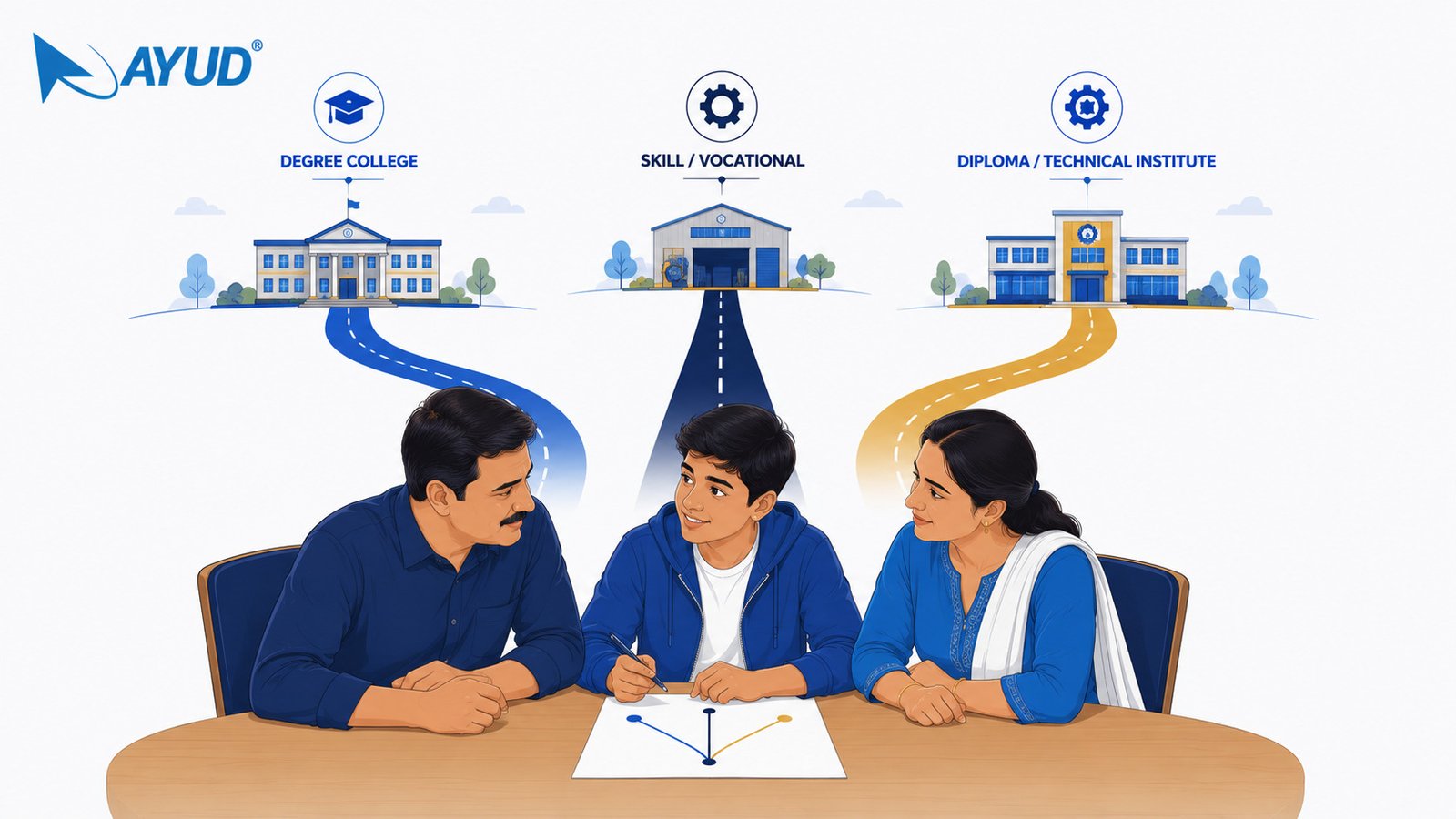
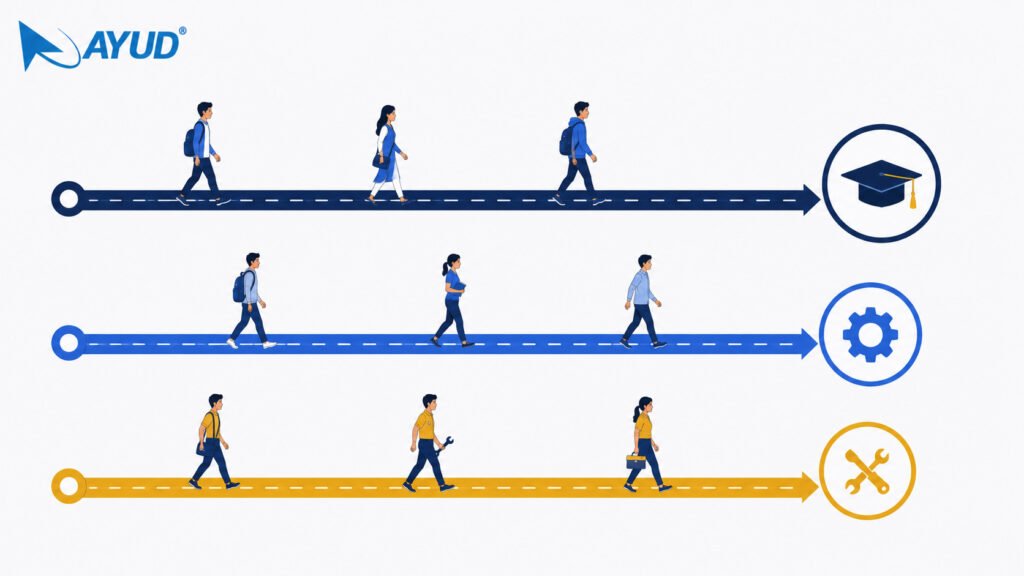
Forget the ten-item lists. In practice there are the three routes at the heart of how to choose career after 10th, and they differ far more in cost and timing than in glamour.
| Route | Duration | Earliest earning age | Ends in | Best for |
|---|---|---|---|---|
| PUC / Class 11–12 (Science, Commerce, Arts) | 2 years | 21–22, after a degree | A degree or professional course | Children who read well and sit exams well |
| Polytechnic diploma | 3 years | 18–19 | Junior technician role, or 2nd year of BE via DCET | Practical learners who intend to reach a degree |
| ITI trade | 1–2 years | 17–18 | Trade job or apprenticeship | Children who need to earn soon and learn by doing |
The Ayud Lens: Scarce, Balanced, Overvalued
A route is not good or bad in the abstract. It is good relative to how many people are already walking it. So I run every how to choose career after 10th conversation through three buckets:
- Scarce — skilled trades with a certification plus a digital or English layer on top. Electrician, fitter, welder, mechatronics, lab and diagnostic support. Employers in Kalaburagi and Hyderabad cannot fill these.
- Balanced — PUC Science and PUC Commerce done properly, with a plan for what follows. Steady, but you must be in the top third of the class.
- Overvalued — PUC Science taken purely for family status, and “any diploma” treated as a guaranteed shortcut to a job. Both look safe from outside. Neither is.
The Employability Data That Should Change How to Choose Career After 10th
The India Skills Report 2026, produced by ETS with CII, AICTE and AIU from over one lakh assessments, measures how job-ready each qualification actually leaves you. Here is what it found.
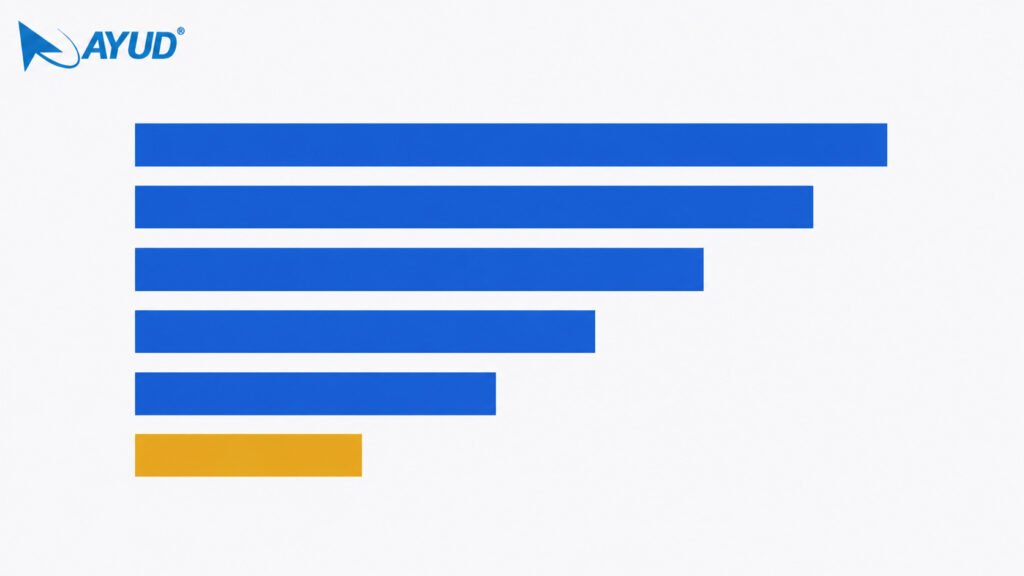
| Qualification | Employability, 2026 |
|---|---|
| Computer Science engineering | 80% |
| IT engineering | 78% |
| MBA | 72.76% |
| Engineering (BE / BTech, all branches) | 70.15% |
| National average, all graduates | 56.35% |
| ITI | 45.95% |
| Polytechnic diploma | 32.92% — lowest of any category |
Most parents in my sessions assume the diploma is the safe practical shortcut. It is the least employable qualification in the country on its own, and this single number reframes how to choose career after 10th for most families. But do not misread it. The diploma is a weak destination and an excellent bridge — a student who finishes a diploma and enters the second year of a BE degree through DCET lands in the 70.15% group, three years faster and far cheaper than the PUC route. Read our DCET 2026 Karnataka diploma-to-engineering route guide before you commit to a polytechnic.
The Honest Catch in Each Route
Nobody explaining how to choose career after 10th tells parents this part, so I will.
- PUC Science: two years is only the entry fee. The real bill is the coaching, and then four to five more years of college. Add it up before you enrol, not in year two.
- Polytechnic: weak on its own, strong as a bridge. If nobody in the family is committed to the DCET step three years from now, this route will disappoint you.
- ITI: employability is decent and the course is short, but the ceiling arrives fast without an apprenticeship and a follow-on certification. Plan the second step on day one.
- PUC Commerce: genuinely good, badly taught in many colleges. Check who teaches Accountancy before you check the building.
- Arts: not a failure stream. It is a real route to law, media, psychology and public service — but only with a plan attached, which is the same condition every other route carries.
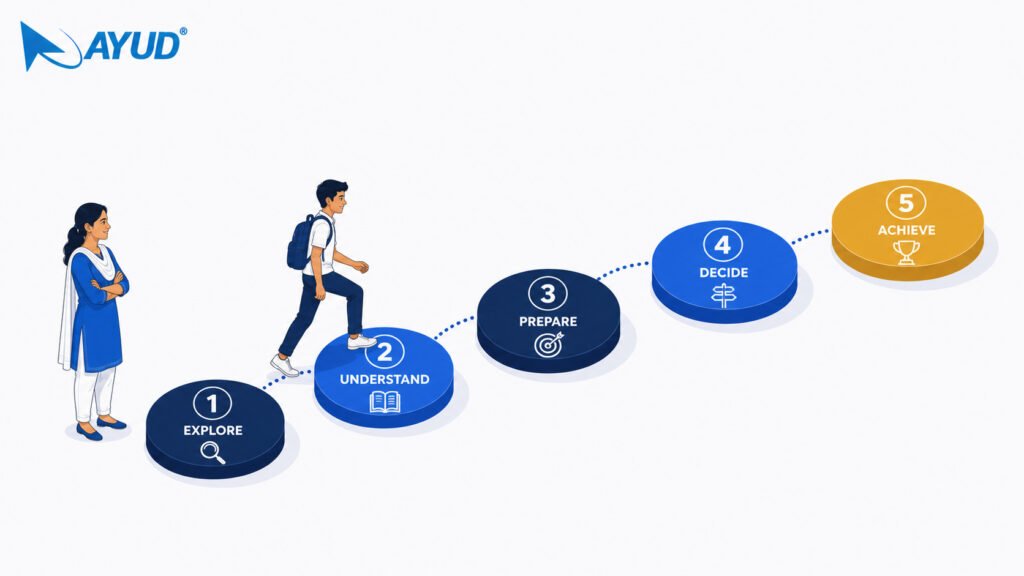
How to Choose Career After 10th: The 5 Steps I Use
Step 1 — Read the marksheet, not the total
A 78% built on Social Science and Kannada is a different child from a 78% built on Maths and Science. The subject pattern predicts the next two years far better than the aggregate does.
Step 2 — Separate the child’s interest from the family’s memory
Ask what part of a subject your child likes, not which subject. “I like fixing things” and “I like explaining things” point to completely different routes and neither one is on a marksheet.
Step 3 — Calculate cost to first salary
Add fees, hostel, coaching and travel for the full path, including any compulsory further course. Divide by a realistic starting salary. If the answer is more than four years of that salary, the route is a stretch — be honest about it now.
Step 4 — Ask whether the route ends in a job or only in another course
This is the question that separates good advice from bad in how to choose career after 10th. A diploma ends in another course for most students. An ITI trade with an apprenticeship ends in a job. Neither is wrong — but the family must know which one it has bought.
Step 5 — Build one exit ramp
Whatever you choose, name the route out in advance: diploma to BE through DCET, ITI to apprenticeship to supervisor, PUC to a specific degree. Children finish paths that have a visible next step. Retention data says most do not finish paths that do not.
Not sure which route matches your child?
Take the free GoTestIt self-assessment on ayudjobs.com. Fifteen minutes, done together as a family, and it points to a route based on aptitude rather than on marks alone.
A Kalaburagi Family That Changed Its Mind in One Sitting
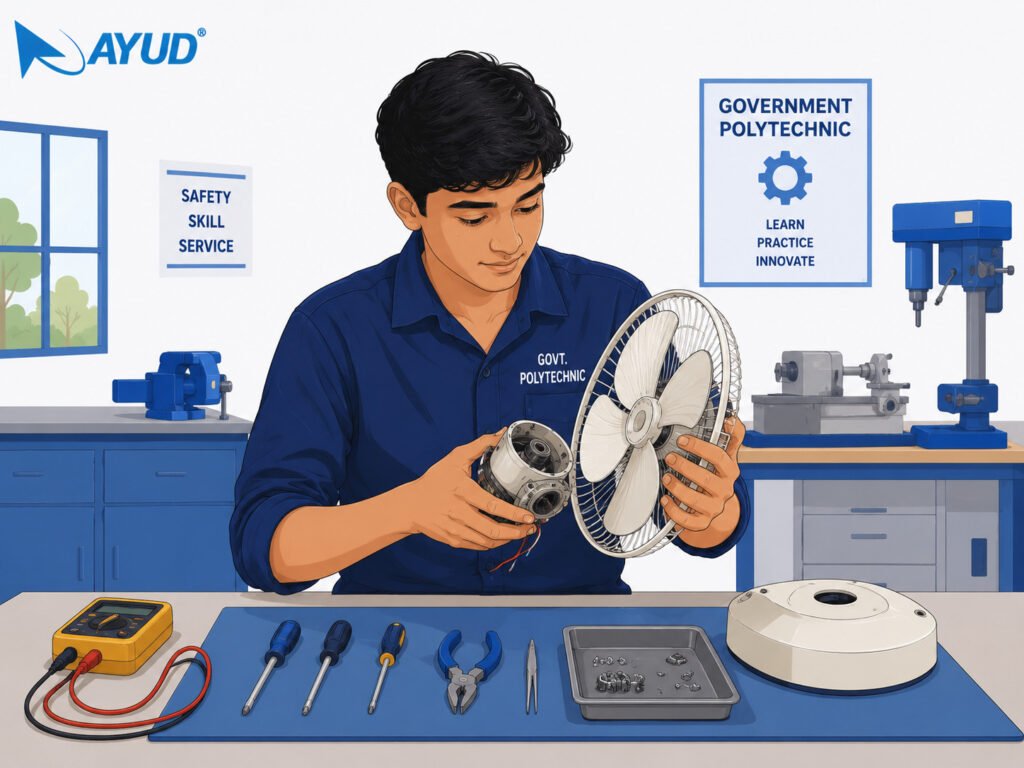
Last year a father brought his son to me with 71% in SSLC and a paid seat already held in a Science PU college. The boy had scored 84 in Mathematics and 52 in Science. He had also rewired his grandmother’s ceiling fan that summer, on his own.
I asked one question: what does he do when nobody has given him work? The father laughed and said, he opens things.
The boy joined a government polytechnic in Mechanical instead, with the DCET step written on a piece of paper and stuck inside his cupboard on day one. He is in his final diploma year now and preparing for lateral entry to a BE. The turning point was not the course. It was the moment the family stopped asking how to choose career after 10th as a status question and started asking what this specific child would actually finish.
What to Do This Month If You Are in Karnataka
Because of the admission calendar, how to choose career after 10th is time-bound this month, not a decision you can carry into September.
- ITI: the Directorate of Industrial Training and Employment runs admissions for the August 2026 session across 270 government and 192 private aided ITIs through cite.karnataka.gov.in, on merit with reservation. Women get free training in government ITIs, and rural and Kannada-medium candidates get grace marks. Later allotment rounds are the live window right now — full detail is in our ITI admission 2026 in Karnataka guide.
- Polytechnic: DTE runs first-year diploma admission on SSLC merit with no entrance exam, through dtetech.karnataka.gov.in. Counselling rounds continue into August — check the current round dates on the portal before assuming you have missed it.
- PUC: most colleges are full, but stream changes within a college are usually still possible in the first weeks of term. If the stream is visibly wrong, move now, not in December.
Frequently Asked Questions
How do I decide without an aptitude test?
Use the marksheet pattern plus one observation: what your child does with unstructured time. Between them they beat a guess. That said, working out how to choose career after 10th without any structured input is harder than it needs to be — a free assessment takes fifteen minutes.
Is a diploma better than PUC for a job?
Not on its own. The India Skills Report 2026 places polytechnic employability at 32.92%, the lowest of any qualification. A diploma becomes strong when it is used as a bridge into an engineering degree through lateral entry.
Is Science the safest stream in 2026?
Only for a child who scores well in Maths and Science. For a child who does not, Science becomes an expensive two years followed by a switch. The safest stream is the one your child completes.
Can my child move to a degree after ITI?
Yes, through diploma lateral entry and open schooling routes, though it takes longer. Plan it from the start rather than discovering it at 20.
What if we already paid the PU college fee and it feels wrong?
Act inside the first term. A stream correction in the first weeks costs a fee. A wrong stream carried for two years costs two years. If the plan is medical-adjacent, also read our guide to NEET alternatives after 12th before locking anything in.
The Bottom Line
A record 7,24,794 Karnataka students passed SSLC in 2026, and national data says barely half of secondary students stay the course. Those two facts, side by side, are the whole argument. Choose for the child’s scoring pattern, count the full cost to the first salary, insist that the route ends somewhere nameable, and write down the exit ramp before you pay. The honest answer to how to choose career after 10th is the route your child finishes — and finishing beats prestige in every dataset we have.
Decide this week, not next month.
Book a one-to-one Clarity Session with our team at book.ayudsoftware.com — bring the marksheet. Or keep the guidance on your phone with the Ayud app. The full UDISE+ 2025–26 findings are summarised by the Ministry of Education.
Register on Ayud Jobs & Get Hired Faster
Create your free profile, apply in one tap, and let recruiters find you. Your next opportunity is closer than you think.