

Diploma vs Degree 2026: Salary & Time Truth
⏱ 9 min read
Quick Answer
The diploma vs degree 2026 debate really comes down to three numbers: time, salary, and scope. A 3-year diploma after 10th gets you earning by age 18–19 with a starting salary of about ₹1.8–3.5 LPA (IndCareer, 2026), while a 4-year degree starts higher at ₹3–6 LPA (India Skills Report 2026) but costs you 2–3 extra years. The catch: diploma employability sits at 32.92% for polytechnic and 45.95% for ITI, versus 70.15% for B.Tech (India Skills Report 2026) — so the diploma only wins if you specialise or upgrade later.
If you are weighing diploma vs degree 2026, here is the honest truth I give students in Kalaburagi every week: there is no single right answer, only the right answer for your situation. A diploma is faster and cheaper. A degree opens more doors long-term. The diploma vs degree 2026 question is not about which is “better” on paper — it is about matching the path to your money, your patience, and your goals.
I have sat with hundreds of parents after SSLC results. The panic is always the same: “Should my child take a diploma and start earning, or push for a degree?” Let me give you the real data, the real salaries, and the one shortcut most people miss.
Register on Ayud Jobs & Get Hired Faster
Create your free profile, apply in one tap, and let recruiters find you. Your next opportunity is closer than you think.
Diploma vs Degree 2026: The Real Difference
The diploma vs degree 2026 comparison starts with time. A diploma (polytechnic) after 10th is a 3-year, skill-first course you join straight after SSLC — no PUC needed. A degree (B.E./B.Tech) is a 4-year course you enter after 12th, meaning 2 years of PUC first, then 4 years of college.
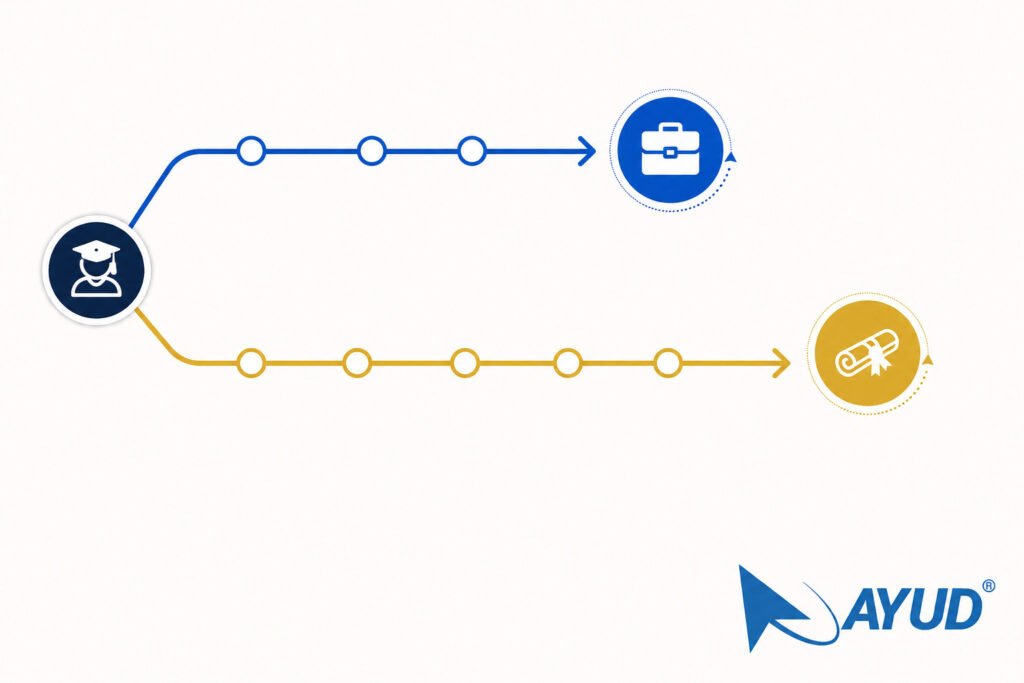
In the diploma vs degree 2026 timeline, a diploma gets you earning three years sooner. You finish at 18 or 19 and can start a job. A degree student is still studying at that age. That head start matters if your family needs income, or if you learn better by doing than by sitting in lectures.
Time Comparison at a Glance
| Path | Entry Point | Duration | Earning Age |
|---|---|---|---|
| Diploma (Polytechnic) | After 10th (SSLC) | 3 years | ~18–19 |
| Degree (B.E./B.Tech) | After 12th (PUC) | 2 + 4 = 6 years | ~21–22 |
| Diploma + Lateral Entry | After 10th (SSLC) | 3 + 3 = 6 years* | Degree at 21 |
*Lateral entry lets a diploma holder skip straight into 2nd year of B.Tech, reaching a full degree in 6 years from 10th instead of the usual longer route (CollegesInfo, 2026).
Diploma vs Degree 2026 Salary: Which Pays More?
So what does diploma vs degree 2026 mean for your first salary? A fresh diploma holder in India starts at roughly ₹1.8–3.5 LPA, while a B.Tech degree fresher starts at around ₹3–6 LPA (India Skills Report 2026; IndCareer, 2026). The gap is real — but it narrows fast for anyone who specialises or upskills.
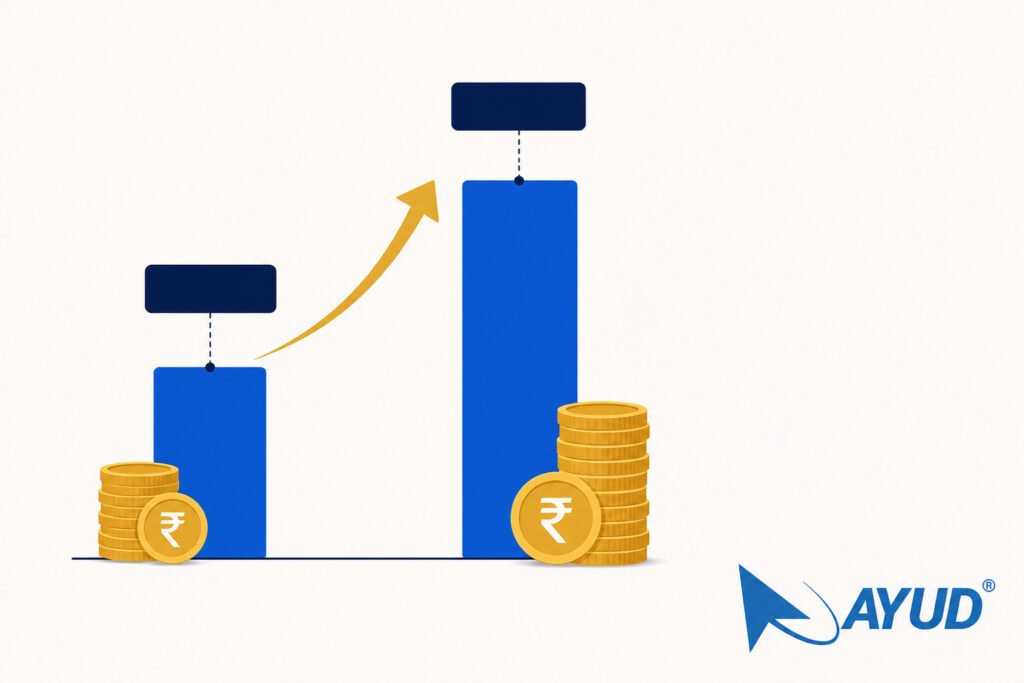
The diploma vs degree 2026 salary gap is real but not permanent. Here is the part nobody tells you: a generalist diploma holder can stall around ₹3–4 LPA for years, but a specialist — automation, data, a named software tool — can cross ₹80,000 a month by year five (industry salary data, 2026). Your skill, not your certificate, decides the ceiling.
This diploma vs degree 2026 salary table uses 2026 figures. Treat these as starting ranges, not promises — location, branch, and skill move them a lot.
| Qualification | Entry Salary (2026) | 5-Year Potential |
|---|---|---|
| Diploma (generalist) | ₹1.8–3.5 LPA | ~₹3–4 LPA (can stall) |
| Diploma (specialist) | ₹2.5–4 LPA | ₹8–10 LPA+ |
| B.E./B.Tech Degree | ₹3–6 LPA | Faster ceiling, higher grade in govt/PSU |
Sources: India Skills Report 2026; IndCareer 2026; industry salary aggregates 2026.
Diploma vs Degree 2026 Job Scope: What the Data Says
On job scope, the diploma vs degree 2026 picture has shifted in one important way. Employers now hire for proven skill, not just the degree tag. As per the India Skills Report 2026, 64% of employers treat candidates with AI/ML, data science, or cybersecurity skills as “premium talent” regardless of college, and only 31% still prioritise elite-institute tags.
The diploma vs degree 2026 employability data tells a clear story, though. Polytechnic diploma employability sits at 32.92% and ITI at 45.95%, while B.E./B.Tech holds at 70.15% (India Skills Report 2026). A degree still opens more doors on average — but a diploma holder with a real, in-demand skill beats a degree holder who coasted.
Where Each Path Wins
- Diploma wins: hands-on trades, technician-specialist roles, production, maintenance, site supervision, government Junior Engineer (JE) posts, Railways (RRB JE), and PSUs.
- Degree wins: design-level jobs, planning, R&D, campus placements, higher govt pay grades, and roles that shortlist B.Tech first.
Still torn between the two skill-first routes? Read our full polytechnic vs ITI after 10th comparison before you decide.

The Ayud Lens: Scarcity, Balanced, or Overvalued?
Through the Ayud lens, the diploma vs degree 2026 choice is about value, not prestige. We sort every path into three buckets. A scarce skill (industrial automation, AI-adjacent tech, specialised trades) is undersupplied — a diploma here pays off fast. A balanced path (core mechanical, civil) has steady demand and steady pay. An overvalued path is one everyone crowds into for the tag, where a plain degree no longer guarantees a job.
Here is the catch, honestly: a diploma or a degree is only as valuable as the skill behind it. In 2026, a generic degree with no practical ability is closer to “overvalued” than parents realise, while a diploma plus a scarce, AI-proof skill is quietly one of the smartest bets in Tier-2 India.

The Shortcut Most People Miss: Do Both
The smartest diploma vs degree 2026 move is often “both.” Through lateral entry, a 3-year diploma holder enters directly into the 2nd year of a B.E./B.Tech and reaches a full degree in about 6 years from 10th (CollegesInfo, 2026). Your final degree does not say “lateral entry” on it — you are eligible for all campus placements (IndCareer, 2026).
Even better, under the new National Credit Framework (2025), your diploma is no longer a dead-end — it earns credits that count toward the degree. The old “diploma → job → stagnation” story is being replaced by “diploma → job + credits → degree” (industry analysis, 2025). You can earn first, then stack a degree on top.

The exam route matters here — see our step-by-step guide to lateral entry through DCET 2026 for eligibility and dates.
A Real Kalaburagi Story
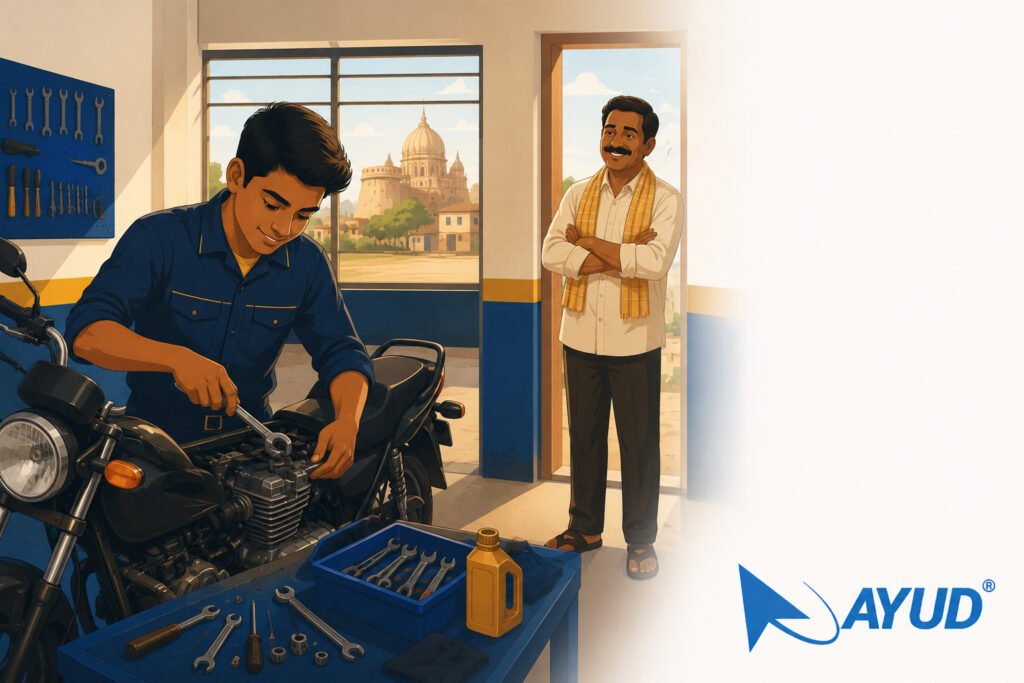
Last year a parent from Kalaburagi came to me terrified. His son had scored just 62% in SSLC, and relatives were pushing the “take a degree or you are nobody” line. Money was tight. The boy loved fixing bikes and electronics — he learned with his hands.
We made the diploma vs degree 2026 decision the practical way. He joined a mechanical diploma at a Kalaburagi polytechnic for a total course fee of around ₹12,810 for three years (Shiksha, 2025) — a fraction of a degree’s cost. He is now in his final year, already has a workshop internship, and plans lateral entry into B.Tech afterwards. Same degree in the end, three years of hands-on skill ahead, and far less financial stress on the family.
If you want this decided with local guidance, our career counselling in Kalaburagi guide walks families through it face to face.
Diploma vs Degree 2026: Which Should You Choose?
Your diploma vs degree 2026 answer depends on three honest questions. Answer them truthfully and the path becomes obvious.
- Money: Does your family need you earning sooner, or can you invest 6 years before a full salary? Tight budget leans diploma.
- Learning style: Do you learn by doing or by theory? Hands-on learners thrive in polytechnic labs.
- Ambition: Do you want design/R&D and top campus placements? That leans degree — or diploma-plus-lateral-entry.
The 2026 market has reframed diploma vs degree 2026 entirely. The question students used to ask was “which degree?” Now the real question is “which skill, and will it survive AI?” With over 90% of workers in key sectors already using AI tools (India Skills Report 2026), the safest bet in either path is a practical, hard-to-automate skill — not the certificate alone.
How to Apply for a Diploma After 10th in Karnataka (2026)
In Karnataka, diploma admission runs through the DTE (Department of Collegiate and Technical Education) at dtetech.karnataka.gov.in, based on your SSLC marks — there is no entrance exam for first-year diploma (AglaSem, 2026). You typically need to have passed SSLC with a minimum aggregate of about 35%, with relaxation for reserved categories, and the process usually opens around the SSLC result in late April or May.
FAQ: Diploma vs Degree 2026
Is a diploma as good as a degree in the diploma vs degree 2026 market?
Not identical, but not inferior either. A degree has higher average employability (70.15% vs 32.92% for polytechnic, India Skills Report 2026) and a higher salary ceiling, especially in government pay grades. But a diploma holder with a scarce, in-demand skill often out-earns a coasting degree holder. Skill decides more than the certificate in 2026.
Can a diploma holder become a full engineer?
Yes. Through lateral entry, a diploma holder joins the 2nd year of B.E./B.Tech and earns the exact same degree as a regular student — your certificate does not mention lateral entry, and you qualify for all campus placements (IndCareer, 2026).
What is the salary difference between diploma and degree in 2026?
At entry level, the diploma vs degree 2026 salary difference is roughly ₹1.8–3.5 LPA for diploma versus ₹3–6 LPA for a degree (India Skills Report 2026; IndCareer 2026). The gap narrows sharply if the diploma holder specialises or completes lateral entry.
Is diploma cheaper than a degree in Karnataka?
Significantly. A 3-year government polytechnic diploma can cost around ₹12,810 total (Shiksha, 2025), far less than a 4-year degree plus 2 years of PUC. Lower cost and earlier earning make it a strong choice for budget-conscious families.
Should I choose diploma or degree after 10th in 2026?
Choose diploma if you want to earn sooner, learn hands-on, or keep costs low — and consider lateral entry later. Choose degree if you want design-level roles, top placements, and a higher long-term ceiling and can invest the time.
The Bottom Line
The diploma vs degree 2026 decision is really a decision about you — your money, your learning style, and how you want to build skill. Both paths can win. The one that loses is choosing on prestige instead of fit.
Still stuck on diploma vs degree 2026? Let Ayud help you decide with data, not pressure. Take our free GoTestIt self-assessment to see which path fits your aptitude, or book a Clarity Session to talk it through one-on-one. You can also register free at ayudjobs.com or get the Ayud app on the Play Store.
Register on Ayud Jobs & Get Hired Faster
Create your free profile, apply in one tap, and let recruiters find you. Your next opportunity is closer than you think.