
GTTC vs polytechnic: Which Pays More in 2026?
⏱ 10 min read
Quick Answer
In the GTTC vs polytechnic decision, GTTC usually pays more at the start. GTTC Bangalore’s 2022-23 placement cycle recorded 115 students placed, with packages from ₹1.8 LPA to ₹6 LPA, and one independent placement review puts GTTC’s annual placement rate near 80%. A government polytechnic diploma costs less, finishes in 3 years instead of 3+1, and opens far more branches — but it hands you a general qualification, not a specialist trade. Choose GTTC if you want precision manufacturing. Choose polytechnic if you want breadth, a shorter route, or lateral entry into B.E.
Every June and July, parents sit across from me with the same question about GTTC vs polytechnic, and almost all of them are asking it a year too late. They have the SSLC marks card in hand, the DTE portal open on the phone, and about nine days to decide. Nobody has told them these two things are not the same product.
Here is the short version. A polytechnic gives your child a diploma in engineering — mechanical, civil, computer science, whatever the branch. GTTC gives your child a trade. The Government Tool Room and Training Centre was set up in Karnataka in 1972 with support from the Government of Denmark, and it has spent five decades doing one thing: mould, die and precision tool making. That single difference drives everything else — the fees, the years, the salary, the risk.
Register on Ayud Jobs & Get Hired Faster
Create your free profile, apply in one tap, and let recruiters find you. Your next opportunity is closer than you think.
So let me lay out the GTTC vs polytechnic comparison the way I would for a parent sitting in my office, with the actual 2026 numbers and the parts nobody mentions.
GTTC vs polytechnic: the honest 2026 comparison
Before the arguments, the numbers. I have pulled these from official portals and current placement disclosures, and I have flagged where the sources disagree — because they do, and a parent deserves to know that rather than be handed one clean-looking figure. Here is GTTC vs polytechnic side by side.
| What you’re comparing | GTTC (Govt Tool Room & Training Centre) | Government Polytechnic (DTE Karnataka) |
|---|---|---|
| Duration | 3 years + 1 year compulsory in-plant training (stipend paid during training) | 3 years |
| Entry basis | SSLC merit, direct to the centre | SSLC merit via DTE / SAMS centralised counselling |
| Typical fees | Roughly ₹12,800–₹19,300 first year, varies by centre and year (2025-26 listings) | Roughly ₹4,300–₹15,000 per year at government polytechnics (2025-26 listings) |
| Branches offered | 7 diploma streams — Tool & Die Making, Precision Manufacturing, Electronics, Mechatronics, Automation & Robotics, AI & Machine Learning, Post-Diploma in Tool Design | 8+ streams at a typical government polytechnic — CSE, Mechanical, Civil, Electrical, ECE, Automobile, Chemical, Polymer |
| Placement signal | 115 placed at GTTC Bangalore in 2022-23; ~80% annual placement rate per independent review; ₹1.8–₹6 LPA range | Varies sharply by college; strong at top government polytechnics, thin at weaker private ones |
| Recruiters seen | Bosch, L&T, Volvo, Emerson, BEL, plus IT firms | Highly college-dependent; Tata and regional manufacturers at established colleges |
| Seat availability | Narrow — e.g. 75 seats for Tool & Die Making at the Mysore centre | Wide — 1,500+ annual diploma intake at a single large polytechnic like KPT Mangalore |
| Lateral entry to B.E. | Possible, but you’re 1 year behind on the clock | Standard, well-trodden route |
Figures compiled July 2026 from gttc.karnataka.gov.in, DTE Karnataka, and current college disclosures. Fee and placement figures are indicative and change by centre and year — verify with the specific centre before paying.
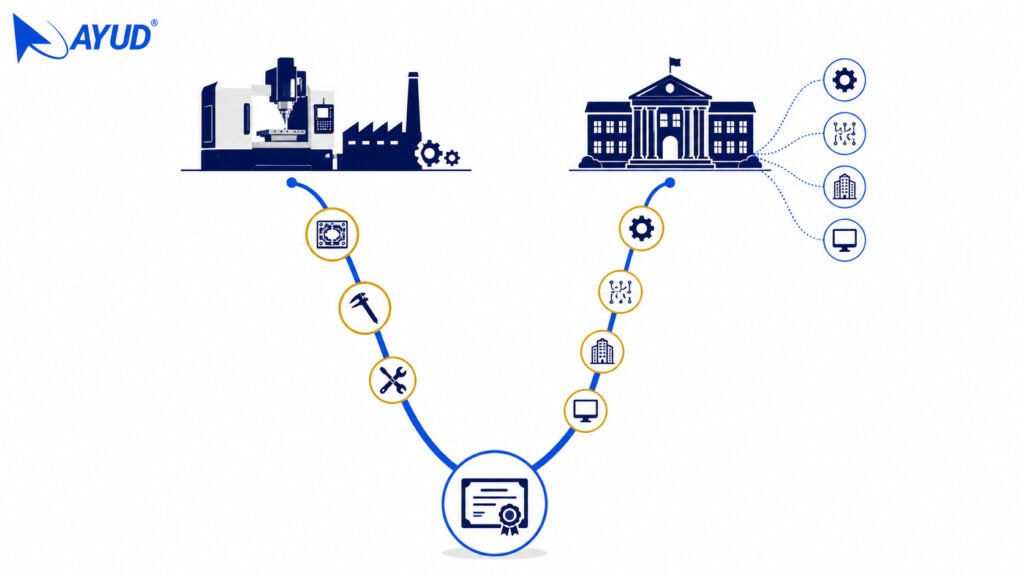
Read that table once more and the GTTC vs polytechnic question stops being about prestige. It becomes a trade-off between depth and breadth, and between one extra year and one extra option.
GTTC vs polytechnic on fees and course length
A government polytechnic is cheaper and shorter. That is simply true, and I will not dress it up. Government polytechnic fees start around ₹4,300 for a first year, and the diploma is done in three years flat.
GTTC costs more and takes longer. The flagship Diploma in Tool and Die Making is three years at the centre plus one compulsory year of in-plant training in industry, per GTTC’s own 2024 course listing. Some aggregator sites describe this as a straight four-year diploma, which is why families get confused — ask the centre directly.
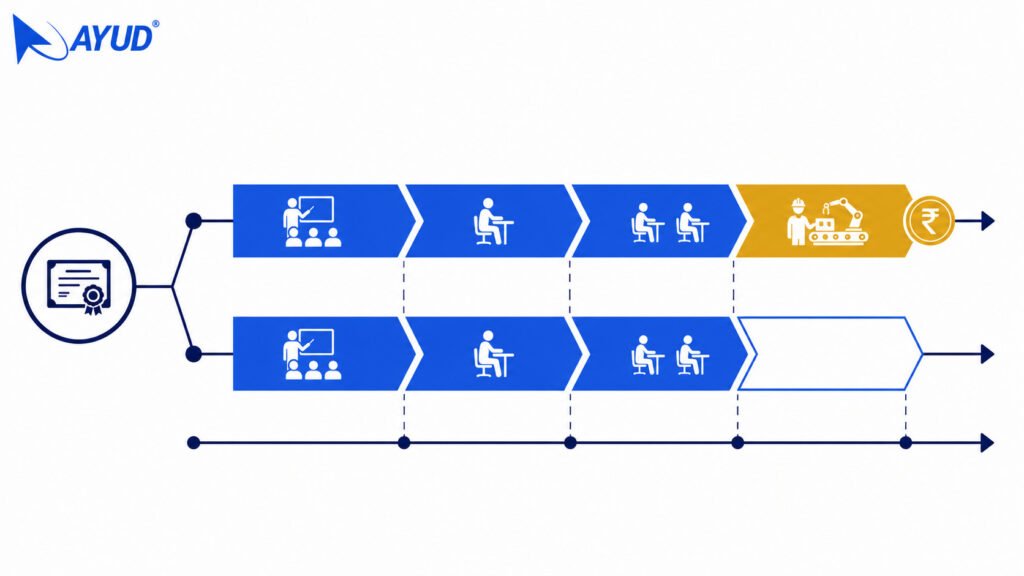
But look at what that fourth year is. It is not a fourth year of classrooms. It is a paid year on a shop floor, with a stipend, on real machines, producing real tooling. So the honest way to read GTTC vs polytechnic on duration is this: the polytechnic student finishes a year earlier and starts job-hunting. The GTTC student finishes a year later and starts having already worked.
One caution on fees. GTTC’s application fee is around ₹500, and there is typically an additional security deposit near ₹3,000 against tools and instruments — that deposit surprises families who budgeted only for tuition.
GTTC vs polytechnic: which one actually pays more?
Now the question you came here for. On current evidence, GTTC pays more at entry — but the gap is narrower than GTTC’s reputation suggests, and it closes fast if the polytechnic student picks the right branch.
GTTC Bangalore’s disclosed placement range runs ₹1.8 LPA at the bottom to ₹6 LPA at the top, with 115 students placed in the 2022-23 cycle and an independently reported annual placement rate near 80%. Student reviews describe monthly salaries around ₹28,000 in line-quality roles at manufacturers like Bosch. That is a genuine, verifiable outcome for a course you enter straight after Class 10.
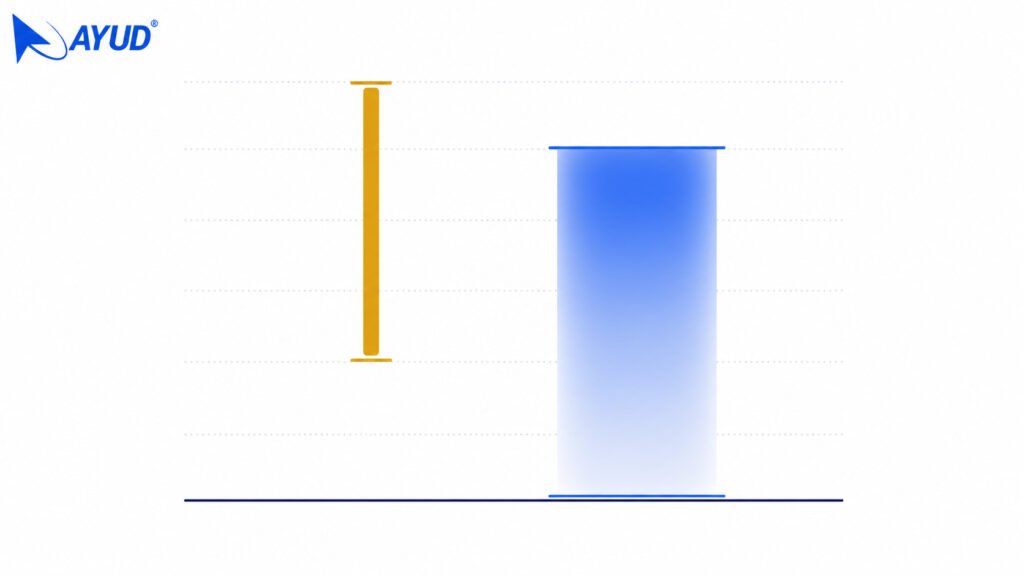
Polytechnic salaries resist a single number, and any page that gives you one is guessing. A computer science diploma from a top Bangalore government polytechnic and a mechanical diploma from a struggling private one are not the same product, even though both say “diploma.” That variance is the real story in GTTC vs polytechnic — GTTC’s floor is higher because the training is narrower and the employer pool is specific.
The catch nobody mentions
GTTC’s strength is also its risk. A tool and die specialist is highly employable inside precision manufacturing and considerably less portable outside it. If the automotive and tooling cluster near you contracts, that specialisation which was your advantage becomes your constraint. A polytechnic diploma in computer science or civil travels more easily across sectors and cities.
So the salary answer has a condition attached: GTTC pays more if you stay in manufacturing.
Is GTTC better than polytechnic for a student after 10th?
GTTC is better for a student who wants a specialist manufacturing trade with a paid industry year and a higher starting floor. A polytechnic is better for a student who wants a shorter, cheaper, broader diploma with easier lateral entry into B.E. Neither is universally superior — the right answer depends entirely on whether your child wants depth or options.
The Ayud lens: scarcity, balance, and what is overvalued
At Ayud we run every course through one filter — is this skill scarce, balanced, or overvalued in the market that will actually hire this student? Applied to GTTC vs polytechnic, the picture is clear.
- Scarce: Precision tool and die making, CNC programming, mould design. Few institutions teach it properly, employers compete for the graduates, and it is stubbornly hard to automate — you cannot prompt your way to a correctly hardened die. This is GTTC’s territory, and it is the strongest AI-proofing argument in the whole comparison.
- Balanced: Mechanical, electrical and civil polytechnic diplomas. Steady demand, steady supply, decent outcomes at a good college.
- Overvalued: Any diploma from an institution with no working placement cell and no industry relationships. The branch name on the certificate is not the asset. The employer relationships behind it are.

This is also where the wider shift shows up. Families used to ask me which degree. Now they ask which skill, and whether AI will erase it. In manufacturing, the answer has been kinder than in many white-collar tracks — and it is worth reading our deeper piece on the GTTC skill gap in Karnataka manufacturing to see how wide that shortage really runs.
A student I still think about
Two boys from the same neighbourhood came to me in the same week, both with SSLC scores in the low seventies. One took a GTTC seat in tool and die making. The other took mechanical at a nearby government polytechnic, mainly because it was cheaper and a year shorter.
Three years on, the polytechnic boy had his diploma and was applying everywhere with limited traction. The GTTC boy was still in his in-plant year — and his mother was, understandably, anxious that he was falling behind. Within four months of finishing, he had an offer from a tooling supplier at a salary the other was still waiting for.
But here is the part I want you to hear, because it is why I refuse to give a one-word answer to GTTC vs polytechnic. The polytechnic boy took lateral entry into B.E., finished it, and today earns more than his friend. The extra year GTTC took from him was the year the other one spent building a longer runway. Both chose correctly. They just chose differently.
How to decide this week
- Ask one question honestly: does your child like working with hands and machines, or with screens and systems? GTTC punishes indifference to the shop floor.
- Check the centre, not the brand. GTTC runs 30+ centres across Karnataka — Kalaburagi, Belagavi, Hubli, Mysore, Hospet and more. Placement strength varies. Ask the specific centre for last year’s placement list.
- Ask the polytechnic the same question. Any college that cannot name last year’s recruiters has told you the answer.
- Confirm the DTE dates. Polytechnic admission runs through DTE Karnataka’s centralised counselling — check dtetech.karnataka.gov.in and see our DCET 2026 Karnataka counselling guide for the current schedule.
- Consider the third door. If neither fits, ITI admission 2026 Karnataka is shorter, cheaper and genuinely underrated for hands-on students.
Frequently asked questions
Is GTTC a polytechnic college?
Not exactly, and this trips up many families. GTTC is a Karnataka government training institution under the state’s technical education framework, and its diplomas are recognised — but it is not a standard DTE polytechnic. Some listing sites even describe it incorrectly as private. In the GTTC vs polytechnic comparison, treat them as two different institution types.
Can I do B.E. after GTTC?
Yes. GTTC diploma holders are eligible for lateral entry into B.E., the same route polytechnic diploma holders use. The practical difference is timing — GTTC’s extra in-plant year means you reach that lateral entry roughly a year later.
Which has better placements, GTTC or polytechnic?
GTTC has the more consistent record, with a reported ~80% annual placement rate and recruiters including Bosch, L&T, Volvo, Emerson and BEL. Polytechnic placements swing hugely by college. A top government polytechnic can match GTTC; a weak private one will not come close.
Is GTTC harder to get into?
Generally yes, because seats are far fewer. A GTTC centre may offer 75 seats in a stream while a large government polytechnic admits over 1,500 students a year. So in GTTC vs polytechnic terms, the same SSLC score that comfortably lands a polytechnic seat may not secure GTTC.
Will AI make tool and die making obsolete?
Less than most fields. Design software has changed the job, but physical precision manufacturing still requires trained human judgement on the floor. Automation has reshaped this trade rather than removed it — which is more than can be said for several desk-based roles.
The bottom line
Do not decide GTTC vs polytechnic on which sounds more impressive to relatives. Decide it on one thing — whether your child wants to be a specialist or keep their options open. Both are respectable. Only one will suit the student sitting in front of you.
If you are still unsure, take our free 15-minute self-assessment before you lock a seat — it maps aptitude to trade suitability and takes the guesswork out of exactly this choice. Start GoTestIt free, or if you would rather talk it through with someone who does this every week, book a Clarity Session.
Register on Ayud Jobs & Get Hired Faster
Create your free profile, apply in one tap, and let recruiters find you. Your next opportunity is closer than you think.